 YR Sports Lab
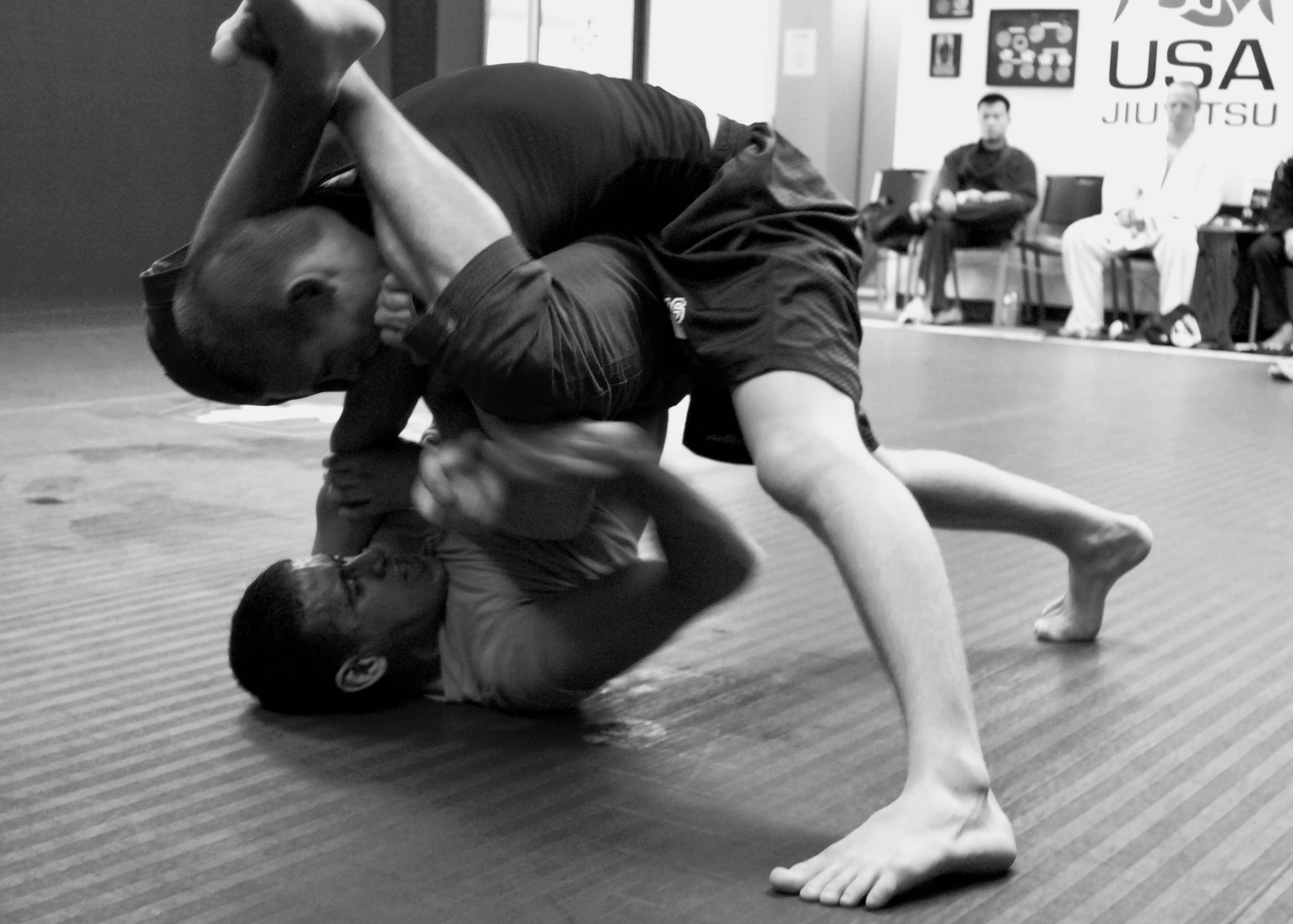
You stand up to pass, your leg gets trapped out of nowhere, and a second later you are flat on your back. That is how most jiu-jitsu players remember their first encounter with X-Guard. This guard has no century-old judo lineage behind it; it was more or less written into the modern competition map single-handedly by jiu-jitsu legend Marcelo Garcia. Riding X-Guard and the leg-control system around it, he won four ADCC world titles and five IBJJF World Championship black belt golds, and is widely regarded as one of the finest ground technicians the sport has produced. This guide walks through X-Guard's origin story, mechanics, entry timing, strengths and limits, common counters, and the role it plays in competition today.
1. Origins: Marcelo Garcia and the Floor-Level Leverage That Toppled Giants
Marcelo Garcia (nicknamed Marcelinho, born 17 January 1982 in Formiga, Minas Gerais, Brazil) grew up training karate and judo before moving into jiu-jitsu, earning his black belt under four-time world champion Fabio Gurgel. His competitive record stands at 80 wins and just over 10 losses (sources record between 11 and 12 defeats), with 59 of those wins coming by submission. Over his career he collected five IBJJF World Championship black belt golds (2004, 2006, 2009, 2010, 2011) and four ADCC world titles (2003, 2005, 2007, 2011, all at -77 kg), plus four absolute-division medals: bronze in the absolute at the 2004 and 2006 IBJJF Worlds, bronze in the 2005 ADCC absolute, and silver in the 2007 ADCC absolute. He was twice awarded Most Technical, and is a member of both the IBJJF Hall of Fame and the ADCC Hall of Fame (the third jiu-jitsu competitor ever inducted into the latter).
The invention that turned "getting passed" into a trap
In the early 2000s, as no-gi jiu-jitsu rulesets were still taking shape, the standing pass was the guard player's biggest headache. Marcelo Garcia used that moment to showcase what X-Guard could do: trap one of the opponent's legs between both of yours, break their standing balance, and flip a situation that normally favours the passer into a launch window for sweeps and leg locks. Multiple independent sources agree in listing X-Guard, Single Leg X, butterfly guard and his signature guillotine as the techniques he brought into the modern no-gi arena, and note that this system pushed a whole generation of competitors toward open guard and leg entanglement research.

There is no single documented moment of "invention" for X-Guard. Its double-leg-wrap concept has roots in traditional judo ne-waza leg control, but the person who systematised it, carried it into the elite competition arena and proved it works against far larger opponents is, by common consent, Marcelo Garcia. For a closer look at another guard from the same family, see our deep dive on butterfly guard; for X-Guard's nearest relative, see Single Leg X.
2. Mechanics: Trap One Leg With Both of Yours and Break Their Base
The classic entry into X-Guard develops out of butterfly guard, and the whole sequence breaks down into these steps:
| Step | Key points |
|---|---|
| ① Elevate and force them up | From butterfly hooks, push up under the opponent's armpits to lift their legs out of your hook range and force them to post on their feet and stand |
| ② Dive under the leg | The instant they stand, hook one of their legs and slide your body underneath them |
| ③ Build the X | Wedge your legs against the inside of their knee and near their hip to form the X-shaped frame, while one hand grips their ankle or heel and the other controls their sleeve or wrist |
| ④ Break their centre of gravity | Keep your hips directly beneath their centre of mass and elevate slightly so their weight settles onto your legs, dissolving their standing base |
| ⑤ Finish with the standing sweep | Remove the top hook, plant your other foot on their thigh and extend it upward while keeping the bottom hook engaged, dumping them to the mat |
In gi competition you can also use collar grips to close the distance and burrow underneath, which makes the controlling hand far more secure. That is exactly why X-Guard is often described as fluent in both gi and no-gi.
3. Entry Timing and Setups
X-Guard has a few classic entry windows, and they share one trait: the opponent is standing up to pass or trying to create distance.
First, when your butterfly guard elevates them to their feet. This is the mainstream entry: the guard player actively pushes up to force the opponent to stand, then dives underneath the moment their base narrows.
Second, as a transition out of deep half guard. If you are working from deep half toward the back or a side angle and the opponent shifts their weight backward, you can flow straight into X-Guard.
Third, in the scramble off a Single Leg X extension or a failed takedown. When both players end up tangled on the mat after a takedown attempt fails and one leg gets wrapped by a single-leg entanglement, that often extends into a full double-leg X-Guard.
X-Guard is also a recognised gateway into the leg lock system: once a sweep fails or gets partially defended, a single turn is usually enough to slide into ashi garami and keep attacking the ankle or knee, which is one reason the position is especially popular in no-gi.
4. Strengths and Limits
| Strengths | Limits |
|---|---|
| Purpose-built against opponents who pass standing, turning their height and weight advantage into a liability | Requires real hip mobility; players who lack flexibility get their posture crushed |
| Works in both gi and no-gi, with slightly different connections but identical principles | Rarely submits directly; it is primarily a sweeping and transitional position, not a finishing one |
| A natural gateway into the leg lock system, so a failed sweep can convert into ashi garami | An opponent who reads the ankle threat early will attack the top hook first and break the structure |
| Teaches the core open-guard skills of entering, breaking balance and reading timing | An opponent who refuses to stand and instead drives their weight straight down can smash-pass it quickly |
5. Common Counters
The window for shutting X-Guard down sits in the phase where the opponent has not fully burrowed underneath you and the X has not yet formed. The mainstream counters:
First, prevention: never hand over your weight. Facing butterfly hooks, avoid loading your full body weight onto them, and the moment you feel the elevation coming, race to pass before your opponent has time to complete the entry.
Second, the Peel Down. Grip the wrist of the hand controlling your ankle and keep that arm straight, drive your weight toward the opponent's head, press down the foot they have planted on your thigh, and step back around into side control.
Third, the X-Guard Surf. Shift your weight backward and then forward to build momentum, slide the leg that has been crossed over your head and neck across to the other side, insert your hand under their armpit, and transition into side control.
What happens next for both players
Once the top player lands a Peel Down or Surf, they usually have side control and can move directly to a pin or finish the pass, flipping a defensive position into an outright reversal.
When the bottom player's sweep gets defended, there is no need to bail out: as long as the bottom hook still wraps the opponent's ankle, one turn often slides into Single Leg X or ashi garami, converting a sweep threat straight into a leg lock threat.
6. How Often It Shows Up in Competition
The governing bodies (IBJJF, ADCC) do not publish usage statistics at the technique or guard-system level, so the figures below come from third parties and should be read as indicative only. A ranking article on the Gracie Barra Irvine site (retrieved 2026/08) lists X-Guard among the five most-used guards in modern competitive jiu-jitsu, alongside spider guard, De La Riva, lasso and half guard, and specifically highlights how effective it is against opponents who choose to pass standing, producing high-percentage sweeps that are hard to defend and often dump the opponent straight into mount or back control.
On the rules side, X-Guard is an open guard and, like every other guard system, is legal from white belt onward in both gi and no-gi, with no belt restriction. However, under current IBJJF rules (checked in 2026), extending your control into a knee reap, meaning your shin crosses the vertical midline of the opponent's body and puts pressure on the outside of the knee, is a foul. That restriction took shape gradually after the rule revision at the end of 2002, and today only brown and black belts are permitted to apply it at certain angles. This is the rule boundary X-Guard players most need to watch as they move from leg control into leg lock attacks.
7. Safety Notes
X-Guard itself is a sweeping and transitional position rather than a high-injury-risk technique, but it has been described as the gateway to the leg lock system, one turn away from ashi garami, and the real risk lives in the leg lock finishes that follow. A knee reap applied with poor control can damage the ACL and other key knee ligaments, and the player being reaped has such a restricted range of motion that escapes themselves become injury-prone. That is the main reason the IBJJF restricts these finishing angles at lower belts. For more on injuries in related leg entanglement positions, see our deep dives on Single Leg X and heel hook biomechanics.
・When entering ashi garami or any leg entanglement, slow the pace down so both players can clearly feel the angle changing
・Tap the moment you feel clear compression or tightness in the knee or ankle; do not grit it out waiting for an escape window
・Below brown belt, avoid deliberately hunting knee-reap finishing angles; they are already restricted in most gyms and rulesets
・When drilling X-Guard sweeps, mind the foot you plant on your partner's thigh and avoid extending explosively, which loads their knee laterally
FAQ
Can white belts use X-Guard?
Yes. X-Guard is an open guard, and like every other guard system it carries no belt restriction, so it is legal from white belt onward. What is actually restricted is finishing from a knee reap position, which is illegal at lower belts. That is a separate question from whether X-Guard itself is legal.
What is the difference between X-Guard and Single Leg X?
The difference is how you control the opponent's leg. X-Guard traps one leg between both of your legs to form an X-shaped frame, while Single Leg X wraps one leg around that same leg for tighter, more compact control that flows straight into leg locks. The two positions trade back and forth constantly in a single exchange, and a failed standing X-Guard sweep often slides right into Single Leg X.
How do I escape when someone catches me in X-Guard?
The most effective answer is prevention: when you try to pass standing against someone hooking both your legs with butterfly guard, never hand over your full weight. If you are already trapped, the two standard counters are the Peel Down (grip the outside wrist, drive your weight toward their head, press their foot down and step back into the pass) and the X-Guard Surf (shift your weight back, then forward, and slide your leg over their head and neck to switch sides).
Is X-Guard still common in modern competition?
Third-party rankings list X-Guard among the five most-used guards in modern competitive jiu-jitsu (Gracie Barra Irvine site ranking, retrieved 2026/08), and it is especially effective against opponents who choose to pass standing. Neither the IBJJF nor ADCC publishes technique-level usage statistics, so treat this ranking as indicative rather than official.
Does training X-Guard carry an injury risk?
X-Guard itself is a sweeping and transitional position, not a high-risk technique, but it is a gateway into the leg lock system and a single turn often lands you in ashi garami. The real risk sits in the knee reap finishes that follow, which can damage the ACL and other knee ligaments, so slow the pace down and keep tapping signals clearly communicated.
References
1. MidWeek. Return of the Grappler. midweek.com (retrieved 2026/08; direct source for Marcelo Garcia's own confirmation of his birth date of 17 January 1982, his birthplace in Minas Gerais, his black belt under Fabio Gurgel, and his career record including five World titles and four ADCC titles)
2. Wikipedia. Marcelo Garcia (grappler). en.wikipedia.org (retrieved 2026/08; cross-check source for his biography, titles and absolute-division medals, and support for his widely recognised role in popularising and innovating X-Guard)
3. Marcelo Garcia Jiu-Jitsu (his own official academy site). Marcelo Garcia competition record page. marcelogarciajj.com (retrieved 2026/08; official primary source listing the 2004 and 2006 IBJJF Worlds absolute bronzes, the 2005 ADCC absolute bronze and the 2007 ADCC absolute silver, corroborating the Wikipedia record)
4. BJJ World. Is Marcelo Garcia the GOAT of ADCC? bjj-world.com (retrieved 2026/08; supports the account of him bringing Single Leg X, X-Guard and butterfly guard into the modern no-gi arena)
5. BJJ Eastern Europe (BJJee). What is the X-Guard in BJJ? bjjee.com (retrieved 2026/08; supports the early-2000s timeline of X-Guard rising through Marcelo Garcia's demonstrations, plus the entry, gripping and sweeping step details)
6. Evolve Vacation. How To Combat An X-Guard Player In Brazilian Jiu-Jitsu. evolve-vacation.com (retrieved 2026/08; supports the specific steps of both the Peel Down and the X-Guard Surf counters)
7. Gracie Barra Irvine. 5 Most Used Jiu-Jitsu Guards For Competition. gbirvine.com (third-party ranking, retrieved 2026/08; supports the statement that X-Guard is one of the five most-used guards in modern competition)
8. Elite Sports. What Is Knee Reaping In BJJ? elitesports.com (retrieved 2026/08; supports the definition of the knee reap, the late-2002 rule revision context, and the explanation of ACL and other ligament injury risk)