 YR Sports Lab

The rear naked choke (also known in Brazilian jiu-jitsu as Mata Leão) is one of the most fundamental and most common finishes in jiu-jitsu and MMA: once the attacker secures back control and locks both hands around the neck, the defender is often facing a choice between tapping or losing consciousness within seconds. The move descends from an old choking system in judo, was renamed and popularized within Brazilian jiu-jitsu, and became a core weapon every belt from white to black is expected to know. This entry breaks down its naming story, the mechanics, three typical entry timings, strengths and limitations, common counters, and where it sits in the rules and the competition record.
1. Origins: from judo's hadaka-jime to the "Lion Killer"
In judo, the choke is called hadaka-jime (naked choke), one of the thirty-six shime-waza (constriction techniques) codified when Jigoro Kano founded Kodokan judo. "Naked" here isn't literal; it refers to the fact that the choke needs no grip on the opponent's gi to work, relying purely on the attacker's own arms and body. The word "rear" was added later in English to distinguish it from the front version, mae hadaka-jime (per the Wikipedia entry for "Rear naked choke").
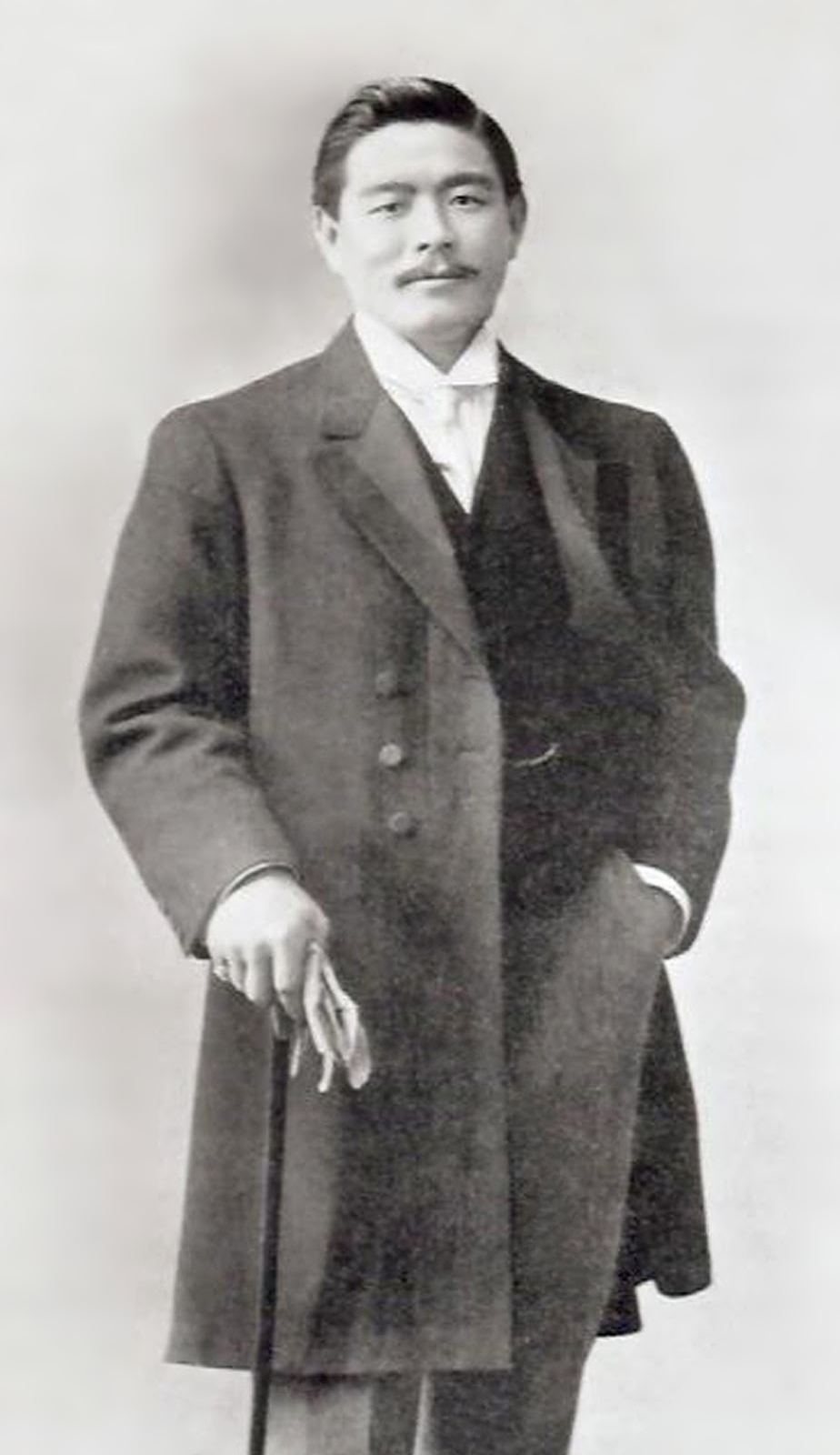
The key figure who brought judo to Brazil was Japanese judoka Mitsuyo Maeda. He arrived in Brazil in November 1914, performing judo demonstrations through a business partnership with Gastão Gracie's circus connections. In 1917, Gastão's 14-year-old son Carlos Gracie watched one of Maeda's demonstrations and decided to study under him; Maeda accepted both Carlos Gracie and Luiz França as students (per the Wikipedia entry for "Mitsuyo Maeda"). Judo's choking system, hadaka-jime included, entered the Gracie family through this lineage and gradually evolved into what became Brazilian jiu-jitsu.
The "Lion Killer": Reylson Gracie and a photo of Mas Oyama
Before it had a proper name, the technique was known in Brazilian jiu-jitsu circles simply as "estrangulamento técnico" (technical strangulation), a plain descriptive term. That changed with Reylson Gracie (a son of Carlos Gracie). By his own account in an interview, in 1963 he saw a photograph of Kyokushin karate founder Mas Oyama and thought of him as a lion; imagining himself choking such an opponent from behind, he named the technique Mata Leão, Portuguese for "Lion Killer." The new name spread quickly through the Brazilian jiu-jitsu community, replacing the older clinical term, and it has stuck as the technique's signature name ever since.
The competitor who really wrote the move into fight history was Carlos Gracie's son Rickson Gracie. On April 25, 1980, in his first formal fight in Brasília, he faced Rei Zulu (Casemiro Nascimento Martins) and won by rear naked choke, the opening match of his legendary fighting career (cross-checked between the Wikipedia entries for "Rickson Gracie" and "Rei Zulu"). Two decades later, on May 26, 2000, Rickson fought former UFC competitor Masakatsu Funaki under the special ruleset of Japan's Colosseum 2000 and finished him with a rear naked choke in the first round, proof that decades on, it remained the finish he trusted most.
2. Mechanics: from back control to the finish
Pulling together Evolve MMA's instructional breakdown of the rear naked choke, the standard version splits into four stages, with the core principle being lining the elbow up on the carotid arteries, not the windpipe:
| Stage | Key points |
|---|---|
| ① Establish back control | One arm goes under the opponent's armpit, the other hooks over the same-side shoulder (the seatbelt grip), chest pressed to their back to prevent them turning free |
| ② Thread the arm around the neck | The choking arm goes under the opponent's chin, with the crook of the elbow aligned to the center of the throat, over the carotid arteries rather than the windpipe |
| ③ Lock the triangle | Pull the bottom arm free and finish the grip with either clasped hands or a hand-on-bicep grip, locking the choking arm's position in place |
| ④ Finish the choke | Position the elbow directly in front of the opponent's nose, forearm under the jaw rather than across the face, and pull the shoulders back to bring the back muscles into the squeeze |
3. Entry timings and setups
First, right after establishing back control. This is the classic path: once both the hook and the seatbelt grip are locked in, finding room around the neck to finish the rear naked choke is usually the top priority.
Second, when an opponent turtles up. When a failed defense forces an opponent to turn and turtle, fully exposing their back, locking in the seatbelt grip for back control is often the overwhelming priority, immediately followed by hunting for the choke.
Third, the instant an opponent turns away after a failed pass or sweep. Many practitioners instinctively turn their back and try to crawl away the moment a defense collapses, and that turning motion itself hands the attacker the back directly, making it one of the most common accidental entries into the choke outside of formal back control.
4. Strengths and limitations
| Strengths | Limitations |
|---|---|
| Once back control is secured, the barrier to entry is low; no complex joint-lock setup is needed, just accurate carotid positioning | Highly sensitive to grip details; if the elbow lands on the windpipe or rides up onto the opponent's jaw, effectiveness drops sharply |
| Legal and equally effective in both gi and no-gi, one of the few core finishes unaffected by equipment | Not an entry technique on its own; it requires back control or at least a seatbelt grip first, relying on other techniques to get there |
| Legal at every belt and every age division under current rule conventions; white belts can start drilling it immediately | If the opponent tucks the chin and fights the hands early, escape rates are high; a late attempt is easy to defuse |
5. Common counters
Evolve MMA's breakdown of rear naked choke defense centers on the principle that "prevention is the best defense, and escape odds are highest before the choke is fully locked in," with three main counters:
First, tucking the chin. The instant you feel the opponent's arm coming around, drop your chin tight to your chest, denying their elbow the room to line up on the carotid. This is the cheapest defense and the one worth drilling into reflex.
Second, hand fighting. Grab the arm that's coming around your neck with both hands, or even get ahead of it by controlling the opponent's hand first, preventing them from completing the locked-hands finish and stalling the choke before it tightens.
Third, turning to face. Before the opponent's grip is complete, use body rotation to turn and face the attacker; once the turn succeeds, back control collapses. After escaping, keep facing the opponent to avoid giving up the back again.
Following up when the escape only half-works
If tucking the chin only blocks part of the space, the attacker usually still has a shoulder or collar grip and should prioritize consolidating the seatbelt grip and hooks rather than forcing the jammed choking arm, waiting instead for the moment the opponent's chin relaxes.
If the opponent's hand fighting jams the finishing grip, switch to the far collar or hunt for space on the other side of the neck, converting the attack into a cross collar choke or another back-based finish rather than turning it into an arm-strength contest.
6. Competition frequency
Neither the IBJJF nor ADCC publishes an official standalone statistic for what share of submissions are rear naked chokes specifically; the various percentages circulating online conflict sharply and their sourcing is unclear, so this entry doesn't use any of them. The most credible third-party analysis comes from BJJ Heroes' breakdown of the 2024 ADCC World Championship (third-party statistics, 2024 data, accessed 2026/09): that event saw 45 matches end by submission, about 34% of all matches, with chokes and upper-body joint locks together, including the rear naked choke, accounting for roughly 70 to 80% of all submissions, far outpacing leg locks. That shows back control and choke systems remain the dominant finishing route under no-gi rules, though the analysis doesn't break the rear naked choke out from that broader choke category as its own precise percentage.
On the rules side, the rear naked choke is a blood choke, working by compressing the carotid arteries to reduce blood flow to the brain, a fundamentally different category from the neck cranks the IBJJF rulebook explicitly bans. Under current rule conventions, adult and youth competitors at every belt can drill and compete with it freely, making it one of the few core finishes with no belt restrictions at all.
7. Safety notes
Research into the physiological mechanism behind loss of consciousness from blood chokes like the rear naked choke points to carotid artery compression reducing cerebral blood flow as the primary cause, rather than simple airway strangulation (Mitchell et al., 2012, Journal of Applied Physiology). That's also why correct elbow positioning, on the carotid rather than the windpipe, is both the key to a higher success rate and the key to reducing unnecessary risk.
A study analyzing video from the 2015 to 2021 Judo World Championships found that loss-of-consciousness rates from chokes vary meaningfully by age group: about 4.3% in adults, 14.6% in juniors, and as high as 18.9% in cadets. The same study found that when the time between an opponent losing consciousness and the attacker releasing the choke exceeds 4 seconds, the risk of neurological symptoms like convulsions rises to 6.7 times that of shorter release times (Sasaki et al., 2022, Journal of Science and Medicine in Sport). This is the most important evidence behind this entry's safety guidance: the moment an opponent suddenly goes limp and unresponsive, release immediately, don't hold on an extra second or two to confirm. For more on the carotid compression mechanics, escape layers, and rehabilitation angle of the rear naked choke, see our companion pieces on the rear naked choke's carotid compression mechanics and three-layer escape defense and the neuroscience of choke-induced blackouts; for more on back control and turtle defense, see back control dominance and turtle defense and preventing the back take.
・Tap immediately at the first sign of carotid pressure, tunnel vision, or dizziness rather than holding on hoping to escape
・If your training partner suddenly goes limp and unresponsive (a sign of loss of consciousness), release instantly; delaying even a few seconds significantly raises the risk of neurological symptoms
・Persistent headache, confusion, weakness, or slurred speech after regaining consciousness should be treated as a red flag, not written off as training fatigue
・Beginners should drill the finish slowly with a coach present before adding speed, to avoid mismatched timing between partners causing injury
FAQ
Can white belts drill the rear naked choke?
Yes. The rear naked choke is a blood choke, working by compressing the carotid arteries to reduce blood flow to the brain, and it is not on any IBJJF joint-lock restriction list. Every belt, adult and youth alike, can drill and use it freely, and it's one of the first submissions most academies teach, since all it takes is back control to have a chance to apply it.
What's the difference between a rear naked choke and a cross collar choke?
The key difference is whether it depends on the gi. The rear naked choke's grip is your own arms, clasped hands or a bicep grip, no collar needed, so it works in both gi and no-gi. The cross collar choke requires grabbing both sides of the opponent's collar, so it doesn't carry over to no-gi at all. Positionally, the rear naked choke comes from the back, while the cross collar choke is more common from guard or mount.
Can a rear naked choke actually knock someone out? Is it dangerous?
A properly applied rear naked choke works mainly by compressing the carotid arteries and reducing blood flow to the brain, a different mechanism from airway strangulation. Video analysis of judo competition shows loss-of-consciousness rates from chokes vary by age group, around 4.3% in adults and as high as 18.9% in cadets. The moment an opponent goes limp and unresponsive, you must release immediately; waiting even a few extra seconds significantly raises the risk of neurological symptoms like convulsions. Under normal training conditions this is a manageable but real risk, not one to be taken lightly by delaying the release.
Should I clasp my hands or grip my own bicep to finish the choke?
Both are recognized finishes taught across major instructional platforms, and neither is definitively better; it comes down to arm length and personal preference. The clasped-hands grip is more compact and needs less arm length; the bicep grip lets you fine-tune elbow position against the carotid more precisely but requires longer arms to reach. Most coaches recommend drilling both and choosing on the fly based on your opponent's build and the angle available.
My opponent always tucks their chin. Does that shut the choke down completely?
Tucking the chin is genuinely the strongest first layer of defense, but it isn't an absolute wall. Instructional sources consistently stress that prevention is the best defense and that escape odds are highest before the choke fully locks in. If you're stuck at the chin-blocking stage, the move is usually to peel the defending hand away or shift your angle to find a fresh path to the neck, rather than muscling through an arm that's already jammed, which usually just hands the opponent an opening to escape or reverse.
References
1. Wikipedia contributors. Rear naked choke. en.wikipedia.org (accessed 2026/09; supports the origin of "naked" meaning no gi is required, and hadaka-jime's place among the thirty-six Kodokan judo shime-waza)
2. Wikipedia contributors. Mitsuyo Maeda. en.wikipedia.org (accessed 2026/09; supports Mitsuyo Maeda's 1914 arrival in Brazil and his acceptance of 14-year-old Carlos Gracie as a student in 1917)
3. Wikipedia contributors. Rickson Gracie; Rei Zulu. en.wikipedia.org (accessed 2026/09, cross-checked across both entries; supports Rickson Gracie's April 25, 1980 rear naked choke win over Rei Zulu in Brasília and his May 26, 2000 rear naked choke finish of Masakatsu Funaki at Colosseum 2000)
4. BJJ Heroes. The Mata Leão, Rear Naked Choke. bjjheroes.com (accessed 2026/09; supports Reylson Gracie naming the technique "Mata Leão" in 1963 after seeing a photo of Mas Oyama, replacing the earlier term "estrangulamento técnico," drawn from Reylson Gracie's own account in an interview)
5. BJJ Heroes. ADCC 2024 After Math: Data Compilation and Analysis. bjjheroes.com (third-party statistics, 2024 data, accessed 2026/09; supports the roughly 34% submission finish rate at the 2024 ADCC World Championship, with chokes and upper-body joint locks together accounting for roughly 70 to 80% of submissions)
6. Mitchell JR, Roach DE, Tyberg JV, Belenkie I, Sheldon RS. (2012). Mechanism of loss of consciousness during vascular neck restraint. J Appl Physiol;112(3):396-402. PubMed PMID 22096121 (supports carotid artery compression and reduced cerebral blood flow, rather than airway strangulation, as the primary mechanism behind loss of consciousness from blood chokes)
7. Sasaki E, Ikumi A, Sakuyama N, Malliaropoulos N, Mikami Y, Nagahiro S. (2022). High-rate settlement and unconsciousness with shime-waza in young judo athletes from a video analytic study in Judo World Championships. J Sci Med Sport;25(11):885-890. PubMed PMID 36167661 (supports loss-of-consciousness rates varying by age group, 4.3% in adults versus 18.9% in cadets, and the finding that release delays of 4 seconds or more raise neurological symptom risk to 6.7 times baseline, the direct evidence behind the "release immediately" safety principle)