 YR Sports Lab
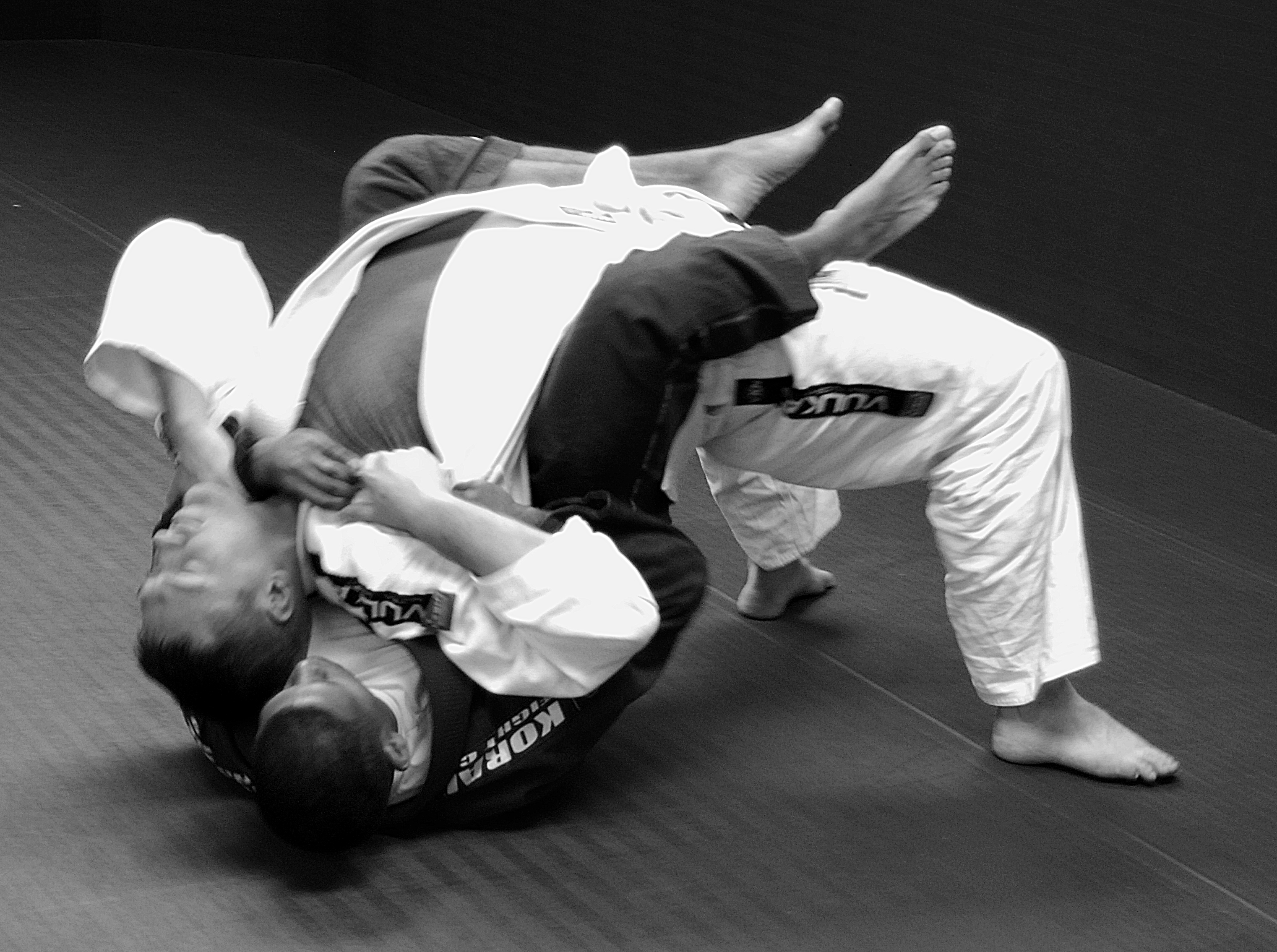
Your opponent is loading weight forward to pass through your Reverse De La Riva guard, and instead of matching that pressure head-on, you lean your whole upper body backward into an arc, as if dodging a bullet, while the hooked leg drags their base out from under them. A second later, you're already circling to their back. This position, named for its resemblance to the iconic scene from The Matrix, has become a go-to shortcut for high-level no-gi competitors who'd rather skip the entire guard-passing exchange and go straight for the back. This entry breaks down where the name comes from, the technical structure, three entry windows, strengths and limitations, common counters, and the safety details worth knowing before drilling this kind of inverted motion.
1. Origins: A Norwegian System Named After a Movie Scene
Start with the name. The technique database MatTime states plainly that the position is called "Matrix" because of the exaggerated backward lean practitioners adopt entering it, resembling the lead character's iconic dodge from bullets in The Matrix. There's no fixed translation used elsewhere either, people simply use the English name. Technically, MatTime defines it as a guard-retention position: the practitioner leans far back to create distance from the opponent while keeping both legs actively framing and hooking, used to reclaim guard just as the opponent is about to complete a pass.
The pair most responsible for bringing the Matrix into modern high-level competition are two Norwegian black belts, Tommy Langaker and Espen Mathiesen. Cross-checking Langaker's Wikipedia entry against his official ONE Championship athlete profile: Langaker was born February 8, 1994, in Haugesund, Norway, and in late 2014 moved with Mathiesen to California to train under Rafael and Guilherme Mendes at their Art of Jiu-Jitsu (AOJ) academy, earning his black belt in 2017. In IBJJF competition, he's won the 2020 European Championship, gold at the 2023 No-Gi World Championship (middleweight), silver at the 2018 Worlds and bronze at the 2021 Worlds; in ADCC, he won the European Trials in just his second-ever no-gi competition to qualify for the World Championship, then took gold at the 2024 European/Middle-Eastern/African Trials at 77kg and bronze at the 2023 edition of the same Trials at 77kg. In 2020, Langaker and Mathiesen returned to Haugesund, Norway, to co-found Wulfing Academy.
A shared system, not a single inventor
Combat media outlet FloGrappling, in an article dedicated to the pair's techniques, describes Mathiesen demonstrating a signature move titled "Reverse De La Riva to Matrix Back Take," describing the two as "exploding onto the competition scene." Their jointly released instructional system, Viking Guards (verifiable on its BJJ Fanatics product page), does list "Tommy's Matrix back take" as a signature technique, with Volume 3 covering the Berimbolo back take and X-Guard sweeps, plus a separate omoplata-based system with exits into the triangle, kimura, armbar and the Matrix back take. In other words, the Matrix isn't the invention of a single person but rather one product of a long-running collaboration between two training partners on open guard systems, which sets it apart from moves with a clearly credited single inventor, such as the Kimura or the Choi Bar.
2. Mechanics: From Reverse De La Riva to Back Control
The Matrix's entry point is the Reverse De La Riva (RDLR) guard. Technique database Digitsu defines RDLR as "the mirror image of its famous parent": when a passer steps their lead leg forward to attempt a knee cut, the guard player threads their inside leg between the opponent's legs to hook behind the lead knee from the inside, using grips on the collar and sleeve (or a collar tie and wrist in no-gi) to maintain distance, while the free foot frames on the opponent's hip or knee. Digitsu's technique listing groups both the Matrix and a "Crab Ride" back take among the common transitions available from this guard.
| Stage | Key details |
|---|---|
| ① Establish the RDLR hook | Thread the inside leg between the opponent's legs to hook behind their lead knee, using upper-body grips to maintain distance and angle |
| ② Wedge in to break their base | Wedge a knee or shin into the back of the opponent's knee as a lever, forcing their weight forward or down, a common off-balancing mechanic in RDLR-based systems |
| ③ Lean back into the arc | The upper body leans dramatically backward, shoulders and head coming close to the mat as the body arcs, the signature image that gives the Matrix its name |
| ④ Keep framing with both legs | Throughout the backward lean, both legs stay actively engaged with the opponent's lower body, doing most of the work of maintaining distance and angle rather than the arms |
| ⑤ Transition to the back or a sweep | Depending on the opponent's reaction, circle around to secure back control, or transition into a sweep, the Viking Guards system pairs this step with the Berimbolo back take as an alternate finish |
It's worth noting that the Matrix's core value is substituting inversion for a straight guard-passing battle, and while it shares the goal of an inverted back take with the Berimbolo, the two come from different guard systems (De La Riva vs. Reverse De La Riva). In live rolling they often link together, but the entry hook and the angle used to break balance aren't the same.
3. Entry Timing and Setups
There are three common windows for entering the Matrix:
First, when the opponent attempts a knee cut or pressure pass off your RDLR. The moment an opponent loads weight onto the leg you've already hooked, they're feeding force directly into the angle you can use to wedge and break their base, making this the most common trigger.
Second, when the opponent hesitates in front of your open guard with their weight slightly forward. The instant an opponent hasn't fully committed to a passing side and leans forward slightly searching for an angle is the ideal window to initiate the backward lean and wedge, breaking their balance before they've set their base.
Third, as a backup route when an opponent has read and defended the Berimbolo or another inversion. Since the Matrix and the Berimbolo belong to the same family of "invert to the back" techniques, an opponent who has already learned to react to Berimbolo hooks may not have the same defensive reflex tuned for an RDLR-based entry, creating an opening precisely because their defensive pattern doesn't fully transfer.
4. Strengths and Limitations
| Strengths | Limitations |
|---|---|
| Skips a head-on guard-passing exchange entirely and goes straight for back control | Requires strong hip mobility and thoracic/cervical flexibility, difficult for stiffer athletes to execute the extreme lean without losing control |
| Substitutes angle and flexibility for brute strength, so smaller or less powerful athletes can still use it effectively | Head and shoulders come close to the mat with limited visibility during the lean, and if the opponent presses down at that moment, extra load lands on the neck and upper back |
| Connects naturally with modern open-guard systems like Reverse De La Riva, Berimbolo and X-Guard, requiring no extra setup | An opponent familiar with the system may anticipate the wedging rhythm and pull their leg free before the lean is fully committed |
5. Common Counters
Countering the Matrix comes down to not letting the opponent complete the wedge that breaks your base:
First, avoid loading your weight too far forward. The moment you feel your lead knee hooked, pull your base back and lower your stance rather than continuing to press forward hunting for a passing angle, cutting down the leverage available to your opponent.
Second, sit down rather than fight to stay balanced. Once your base is actually broken by the wedge, sitting down to dissipate the torque and rebuilding your passing or pinning attempt from a seated position is safer than fighting to stay upright and getting flipped mid-air.
Third, prioritize controlling the opponent's upper body, not just their legs. Completing back control still requires the opponent to get a grip with their hands to circle behind you, so using your elbows and collar control early to block their upper-body movement can meaningfully delay the finish.
Don't fight the wrong direction once a hook lands
Once the Matrix has secured an initial hook on your back, most practitioners' instinct is to twist hard away from the hook, but this actually exposes more angles and makes it easier for the opponent to lock in both hooks and finish taking your back.
A steadier response is to roll in the same direction as the hooked leg while protecting your neck and collar with your hands, buying time to square back up and face your opponent rather than fighting the position from the first instant.
6. Competition Frequency and Legality
The Matrix doesn't have the kind of officially or third-party tracked finish statistics that submissions like the triangle choke or armbar do, since it's a guard-transition and back-take tool rather than a scoring finish, so competition bodies have no reason to track its usage separately. What can be said is that combat media outlet FloGrappling's technical coverage, together with the Viking Guards instructional Langaker and Mathiesen released, both treat the Matrix as one of the signature techniques of this Norwegian pairing, and it's a recognizable transition within the Reverse De La Riva system in recent high-level no-gi competition, though no specific "per-match frequency" figure was found in the sources reviewed, so this is presented as a qualitative description rather than a statistic (accessed 2026/09).
On the rules side, nothing found in IBJJF or ADCC rules documentation lists the Matrix as a restricted or banned technique, which tracks with its nature as a position: joint locks and chokes are what rulebooks track belt-by-belt, while the Matrix is a guard-retention and back-take transition that's, in principle, available to competitors at any belt level. The real barrier to using it isn't a rule restriction but whether a practitioner's flexibility and control are sufficient to support this kind of inverted motion.
7. Safety Notes
The Matrix belongs to the family of inverted techniques, with safety considerations similar to the Berimbolo and Tornado Sweep, moves that require the head and shoulders to contact the mat or the body to arch and rotate through a large range. There's no injury research specific to the Matrix, but broader jiu-jitsu training injury epidemiology is a useful reference point: a 2019 study in Sports Health, surveying 70 Brazilian jiu-jitsu practitioners at a single Canadian gym, found that 91% had been injured at some point during training, with finger, upper-limb and neck sprains and strains the most common injury types (PMID 31173700). Because the Matrix requires the cervical spine and upper back to bear body weight and hold tension while leaned backward, if an opponent presses down at your most vulnerable moment, the load on the neck increases further, which is exactly why inverted techniques like this are generally recommended only after a solid defensive foundation is already in place, added gradually rather than early. For more on the injury mechanisms and protective principles behind inverted techniques, see our Cervical Spine deep dive and our Berimbolo entry.
・Build up the backward lean gradually, confirming your own thoracic and cervical mobility before increasing the range
・Drill early on with a partner who already knows this system, and agree to slow down through the head-and-shoulders-down phase
・If you feel your base fully collapse and can't maintain the angle with your legs, prioritize sitting down over fighting to stay upright
・Add neck and upper-back strength work to your regular training to better tolerate extra load in inverted positions
FAQ
Where does the name "Matrix" come from?
Because practitioners entering this position lean their upper body backward into a near-horizontal arc, much like the lead character dodging bullets in the film The Matrix. The technique database MatTime explicitly traces the name to that scene. There's no fixed translation in most other languages either, people simply use the English name "Matrix."
Can white belts drill the Matrix?
Nothing in the rules documents reviewed lists the Matrix as banned or belt-restricted, since it's fundamentally a guard-retention and back-take transition rather than a joint lock or choke, so it doesn't fall under IBJJF's belt-level restrictions on specific submissions. That said, it demands real hip and spinal flexibility, so most gyms have students build a solid Reverse De La Riva guard and a feel for inverted balance before adding this kind of extreme backward lean.
How is the Matrix different from the Berimbolo?
Both are inverted back-take techniques off open guard, but they come from different guard systems. The Berimbolo inverts from the bottom of De La Riva guard, rolling around the opponent's body to reach the back. The Matrix comes off Reverse De La Riva, breaking the opponent's balance through an extreme backward lean before transitioning to the back. The two link together well in live rolling, but the hooking entry and the way balance gets broken differ, and so do the counters.
What do I do if I get taken over by the Matrix?
Immediately tuck your chin and protect your neck, then roll in the same direction as the leg your opponent has hooked rather than fighting back the other way, which only exposes more angles before they lock in back control. At the same time, use your hands to protect your belt line and collar to slow down their grip for finishing back control, buying time to reset your base or spin out.
What physical attributes does the Matrix require?
The most important factors are hip mobility and thoracic and cervical spine flexibility and control, since the whole motion happens with the body arched backward and the head and shoulders close to the mat, and weak core or neck strength leaves you exposed if your opponent presses down at that moment. Building a foundation with bridges, cat-cow mobility work and hip openers before adding inverted techniques is a sensible progression.
References
1. Wikipedia contributors. Tommy Langaker. en.wikipedia.org/Tommy_Langaker (accessed 2026/09; supports Langaker's birth on February 8, 1994, in Haugesund, Norway; his affiliation with Wulfing Academy; his 2023 IBJJF No-Gi World Championship gold at middleweight, 2018 Worlds silver and 2021 Worlds bronze; and his 2024 ADCC European/Middle-Eastern/African Trials gold and 2023 edition of the same Trials bronze, both at 77kg)
2. ONE Championship. 5 Reasons Why BJJ Star Tommy Langaker Is Such An Elite Submission Grappler. onefc.com (accessed 2026/09; cross-checks with Wikipedia to support Langaker's Norwegian nationality, his 2020 IBJJF European Championship title, and winning the ADCC European Trials in only his second no-gi competition to qualify for the World Championship)
3. Digitsu. Tommy "Viking" Langaker BJJ Record, Stats & Bio. digitsu.com (accessed 2026/09; supports his move to Art of Jiu-Jitsu in California in late 2014 alongside Espen Mathiesen, training under Rafael and Guilherme Mendes; his black belt promotion by José Carlos in June 2017; and co-founding Wulfing Academy with Mathiesen in 2020)
4. FloGrappling. WATCH: Seven Techniques From Espen Mathiesen & Tommy Langaker. flograppling.com (accessed 2026/09; supports Mathiesen demonstrating a "Reverse De La Riva to Matrix Back Take" technique and the article's description of the pair as "exploding onto the competition scene"; this article does not mention Viking Guards by name)
5. BJJ Fanatics. Viking Guards by Tommy Langaker and Espen Mathiesen. bjjfanatics.com (accessed 2026/09; supports Viking Guards as the pair's joint instructional system, listing "Tommy's Matrix back take" as a signature technique, Volume 3 covering the Berimbolo back take and X-Guard sweeps, and a separate omoplata-based system with exits into the triangle, kimura, armbar and the Matrix back take)
6. MatTime. What is Matrix Guard in BJJ? mattime.app (accessed 2026/09; supports the name deriving from the backward-lean scene in The Matrix film, its classification as a guard-retention position, and its use to reclaim guard as an opponent nearly completes a pass)
7. Digitsu. Reverse De La Riva Guard: BJJ Position Guide; BJJ Fanatics. Heel Hook Entries from Reverse De La Riva with Craig Jones. digitsu.com, bjjfanatics.com (accessed 2026/09; Digitsu supports the RDLR hook coming from the inside leg behind the opponent's lead knee, and lists the Matrix and Crab Ride back take among its extension transitions; BJJ Fanatics supports the common RDLR-system mechanic of wedging a knee or shin into the opponent's knee as a lever to break their base)
8. Petrisor BA, Del Fabbro G, Madden K, et al. (2019). Injury in Brazilian Jiu-Jitsu Training. Sports Health;11(5):432-439. PubMed PMID 31173700 (supports the statement that 91% of surveyed jiu-jitsu practitioners had been injured during training, with finger, upper-limb and neck sprains and strains most common)