 YR Sports Lab
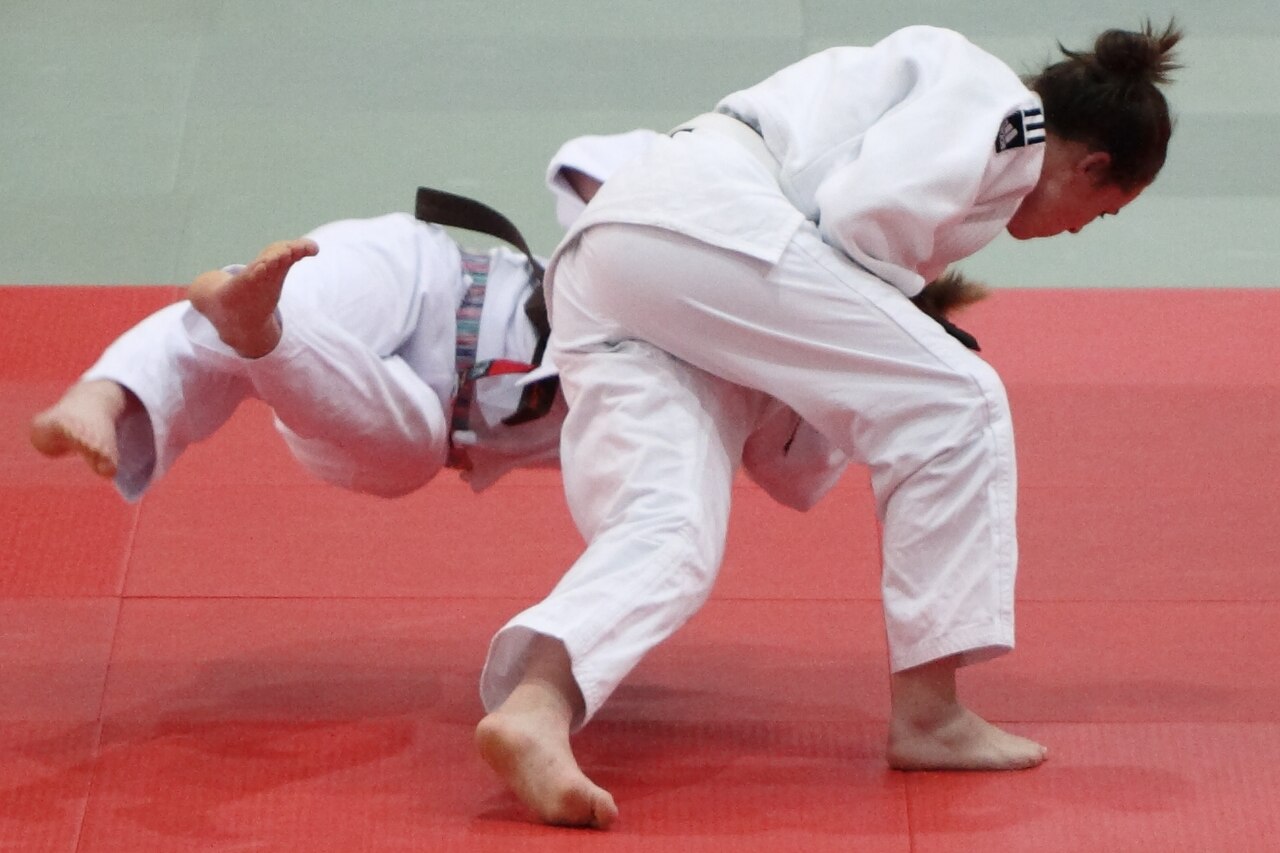
You grab the collar and sleeve, turn in tight, and your opponent stays planted like a post. Or you heave the sweeping leg up with everything you have, the person does not go over, and you end up pitched forward yourself. That is the classic sticking point of Harai Goshi (払腰), a hip throw in group two of the Kodokan gokyo, known in English as the sweeping hip throw. This guide covers its classification, four-step mechanics, three entry timings and common counters, and uses a PubMed systematic review to show where judo injuries most often occur.
1. Origin and Story: A Group-Two Hip Throw of the Kodokan
Harai Goshi has no verifiable single "inventing match" or signature athlete, so this section only states classification facts that were checked against two sources. The Wikipedia entry says it is one of the original 40 Kodokan judo throws, developed by Kano Jigoro, citing Kyuzo Mifune's The Canon of Judo; the LowKick MMA technique article likewise says it was developed by judo's founder. The Kodokan itself was founded by Kano Jigoro in 1882 (Wikipedia, Judo).
The gokyo placement can be cross-checked. Judo Info states that the syllabus originated in 1895 at the Kodokan in Tokyo and, from 1920 to 1982, consisted of 40 throws in 5 groups, with Harai-goshi in group two (Dai-nikyo), number 15 overall. Wikipedia's Gokyo no waza entry lists it as throw 7 of group two, and the two numberings agree. It is also one of the 67 current Kodokan throws and is classified as a hip technique (koshi-waza), meaning a throw driven mainly by lifting power from the hips.
The Name and Its Relatives
The Japanese characters are 払腰, and the English names are sweeping hip throw or hip sweep. Wikipedia lists Hane Goshi (spring hip throw, group three) as a similar technique and notes that the counter Harai Goshi Gaeshi is a foot technique (ashi-waza) that the Kodokan adopted later into its Shinmeisho no Waza (newly accepted techniques).
For other throws in the same family, see this series' Seoi Nage, Uchi Mata and Osoto Gari.
2. Mechanics: Kuzushi, Step-In, Sweep, Follow-Through
Evolve breaks Harai Goshi into four stages, and LowKick MMA adds footwork and sweep placement. In the gi the grips are a collar and sleeve grip, or an over-the-back grip, and Evolve calls good grip control the foundation of the throw.
| Stage | Key points |
|---|---|
| 1. Kuzushi (break balance) | Pull the opponent forward and slightly up so their weight shifts onto their toes or front leg |
| 2. Step in | Place the lead foot between the opponent's feet and rotate the hips so your back is in front of their chest, hips in firm contact |
| 3. Sweep | Extend the sweeping leg outward and upward along the back of the opponent's leg; LowKick MMA says to reap at or below the knee |
| 4. Throw and follow | Guide the opponent over the hip with your upper body, keep the grips and follow them down to a dominant landing |
LowKick MMA stresses that the footwork is roughly a 180-degree pivot, stepping between the opponent's feet, and that stepping to the outside is wrong because it opens an easy counter. Evolve lists five common mistakes: hips too low or too far forward, muscling the sweep instead of relying on timing and hip rotation, entering with no kuzushi, sweeping before the hips connect, and standing too tall to lift with control.
Evolve also names three variations: Harai Makikomi, a rolling version where you wrap the arm and fall with the throw; Ushiro Harai Goshi, a rear sweeping throw entered from behind; and a no-gi version that uses underhooks, body locks and over-unders in place of the collar and sleeve.
3. Entry Timing and Setups
These three entry points are drawn from the Evolve and LowKick MMA descriptions. They are technical notes, not statistical conclusions:
First, when the opponent walks or pressures forward. Evolve says the throw uses the opponent's forward momentum, and LowKick MMA writes that you get the opponent up and over as they come forward by reaping at or below the knee. A forward-leaning opponent already has weight on the front leg, so kuzushi costs the least effort.
Second, in close standing grip exchanges. Evolve notes that the throw works in close-range grappling and, because it relies on timing rather than strength, it can work against bigger opponents.
Third, when the opponent drops the hips and locks the knees against the standard version. LowKick MMA's adjustment is to stop lifting, connect the calf of the sweeping leg to the opponent's outside knee to lock it out, make them lean forward and rotate, then pull them down with the grips as you roll them over.
4. Strengths and Limits
| Strengths | Limits |
|---|---|
| Relies on timing and hip rotation rather than leg strength; Evolve says it works against bigger opponents | Attacking without kuzushi lets the opponent resist or step away (Evolve) |
| LowKick MMA argues its simplicity is what makes it effective | Stepping to the outside of the opponent's feet opens an easy counter (LowKick MMA) |
| Earns 2 points in IBJJF and lands you in top position | If the opponent starts a guard pull first, a throw begun afterward does not score the 2 points |
5. Common Counters and Defenses
Defending Harai Goshi means stopping the four stages from linking up. The first two points below are defensive ideas inferred from the source descriptions; the third has an explicit technical source:
First, deny kuzushi. Evolve says that without kuzushi the opponent can resist or step away, so a defender who is not pulled forward and keeps weight off the toes removes the starting point of the throw.
Second, control the upper body so the opponent cannot get close. Evolve's no-gi takedown defense guide recommends an underhook to control the opponent's shoulders and upper body and block deeper entries, and suggests pummeling drills to win the underhook.
Third, Harai Goshi Gaeshi. Wikipedia describes it this way: when the opponent attacks with a right harai goshi, the defender hooks the left leg around the attacker's lower left leg and reaps it to the right. It is a foot technique, similar to the counter to Hane Goshi.
Follow-Ups When the Standard Version Is Stopped
When the opponent drops the hips and locks the knees, follow LowKick MMA: stop lifting, connect the sweeping calf to the opponent's outside knee, and make them lean forward and rotate before pulling them down with the grips.
After a successful throw, Evolve says to keep grip control and follow the opponent down for a dominant landing; if the throw fails, do not let the effort of the sweep pitch your own weight forward out of control.
For landing and takedown defense from the receiving side, see the site's BJJ takedown defense and ukemi guide.
6. Competition Frequency and Rules
On the rules side, the IBJJF rules summarized by Exponential Jiu-Jitsu say that 2 points for a takedown are awarded once you establish top position for 3 seconds. Rule 4.1.10 gives 2 points or an advantage to the player who starts the takedown before the opponent starts a guard pull, and rule 4.1.11 says a takedown started after the opponent has begun the pull does not score. The IBJJF site currently lists rule book v6.0, so check the latest version before competing.
In judo, Wikipedia's Judo entry states that a throw that places the opponent on their back with impetus and control scores an ippon and wins the contest, so a throw can end the match outright.
As for frequency, IBJJF and ADCC publish only placings and brackets, not per-technique statistics. We found no reliable third-party frequency figure for Harai Goshi, so this is qualitative only: Evolve notes that in BJJ the throw can quickly lead from standing grip fighting to side control, and in MMA it can be used from the clinch and against the cage.
7. Safety: Judo Injury Sites and Landing
We found no study on injuries specific to Harai Goshi, so only whole-sport judo data is cited. The 2018 systematic review by Bromley and colleagues in the British Journal of Sports Medicine included nine prospective studies of Olympic combat sports lasting more than 12 weeks, and found that the most frequently injured areas in judo were the lower back (10.9%), shoulder (10.2%) and knee (9.7%). The authors also note inconsistent injury definitions and exposure measures that prevent direct comparison of severity across combat sports, and these percentages are for judo overall, not a risk figure for Harai Goshi.
・When thrown, do not post a hand; learn breakfalls (ukemi): chin tucked, back rounded, slap the mat with the arm
・Beginners should practice on soft mats with an experienced partner, and the thrower should control the landing rather than slam
・Do not muscle the sweep; a wrong hip position lets the thrower lose their own balance
・If lower back, shoulder or knee pain persists, stop training and get it assessed
FAQ
What is the difference between Harai Goshi and Hane Goshi?
Both are Kodokan hip techniques, but they sit in different groups and have different English names: Harai Goshi is the group-two sweeping hip throw, and Hane Goshi is the group-three spring hip throw. Wikipedia lists them as similar techniques, but the sources cited here do not compare the movements step by step, so confirm details with your coach.
How many points is Harai Goshi worth in IBJJF?
Establishing top position for 3 seconds earns 2 points. Under IBJJF rules 4.1.10 to 4.1.12, a throw begun after the opponent starts a guard pull does not score the 2 points, so attack before the pull starts.
Can I still use Harai Goshi when the opponent drops the hips and locks the knees?
Yes, with a variation. LowKick MMA's approach is to stop lifting, lock the opponent's outside knee with the calf of your sweeping leg, make them lean forward and rotate, then pull them down with your grips. This is a single-source description, so have a coach confirm it.
Does Harai Goshi work in no-gi?
Yes, but the grips change. Evolve says the no-gi version uses underhooks, body locks and over-unders to control the opponent, followed by the same kuzushi, step-in and sweep.
How should I land when someone throws me with Harai Goshi?
Learn breakfalls: tuck the chin, round the back and slap the mat with your arm instead of posting a hand. This is a general safety principle, not data from the cited study. The Bromley systematic review found the lower back, shoulder and knee are the most injured areas in judo.
References
1. Wikipedia contributors. Harai goshi. en.wikipedia.org/Harai_goshi (queried 2026/10; supports one of the original 40 throws developed by Kano Jigoro, the current 67 throws, the hip-technique classification, group two, the English name sweeping hip throw, and the similar and counter techniques); Wikipedia contributors. Gokyo no waza. en.wikipedia.org/Gokyo_no_waza (queried 2026/10; supports Harai goshi as throw 7 of group two)
2. Judo Info. The Gokyo of Kodokan. judoinfo.com/gokyo1 (queried 2026/10; supports the 1895 origin of the gokyo, 40 throws in 5 groups from 1920 to 1982, and Harai-goshi as number 15 in group two)
3. Wikipedia contributors. Judo. en.wikipedia.org/Judo (queried 2026/10; supports Kano Jigoro founding the Kodokan in 1882, the hip-technique definition and an ippon throw winning the contest)
4. Evolve MMA. Understanding The Harai Goshi For BJJ. evolve-mma.com (queried 2026/10; supports the grips, four-stage mechanics, five common mistakes, three variations and the BJJ and MMA usage)
5. Shutts I. Harai Goshi Gaeshi, The Original Judo Throw. LowKick MMA. lowkickmma.com (published 2022/11, queried 2026/10; supports the 180-degree pivot footwork, stepping outside being wrong, and the calf-to-outside-knee variation against a locked knee)
6. Wikipedia contributors. Harai goshi gaeshi. en.wikipedia.org/Harai_goshi_gaeshi (queried 2026/10; supports the counter's foot-technique classification, Shinmeisho no waza status and the hook-and-reap-to-the-right description); Wikipedia contributors. Hane goshi. en.wikipedia.org/Hane_goshi (queried 2026/10; supports Hane Goshi as the group-three spring hip throw)
7. Evolve MMA. 5 Ways To Counter Takedowns In No-Gi BJJ. evolve-mma.com (queried 2026/10; supports using an underhook to control the shoulders and upper body, and pummeling to win it)
8. Exponential Jiu-Jitsu. IBJJF Rules, Takedowns. exponentialjiujitsu.com (published 2024/10, queried 2026/10; supports 2 points for 3 seconds of top position and rules 4.1.10 to 4.1.12 on guard pulls); IBJJF. Rules. ibjjf.com/rules (queried 2026/10; lists rule book v6.0)
9. Bromley SJ et al. (2018). A systematic review of prospective epidemiological research into injury and illness in Olympic combat sport. Br J Sports Med;52(1):8-16. PubMed PMID 28954799 (supports the most injured judo areas being lower back 10.9%, shoulder 10.2% and knee 9.7%, and the limitation of inconsistent injury definitions)