 YR Sports Lab
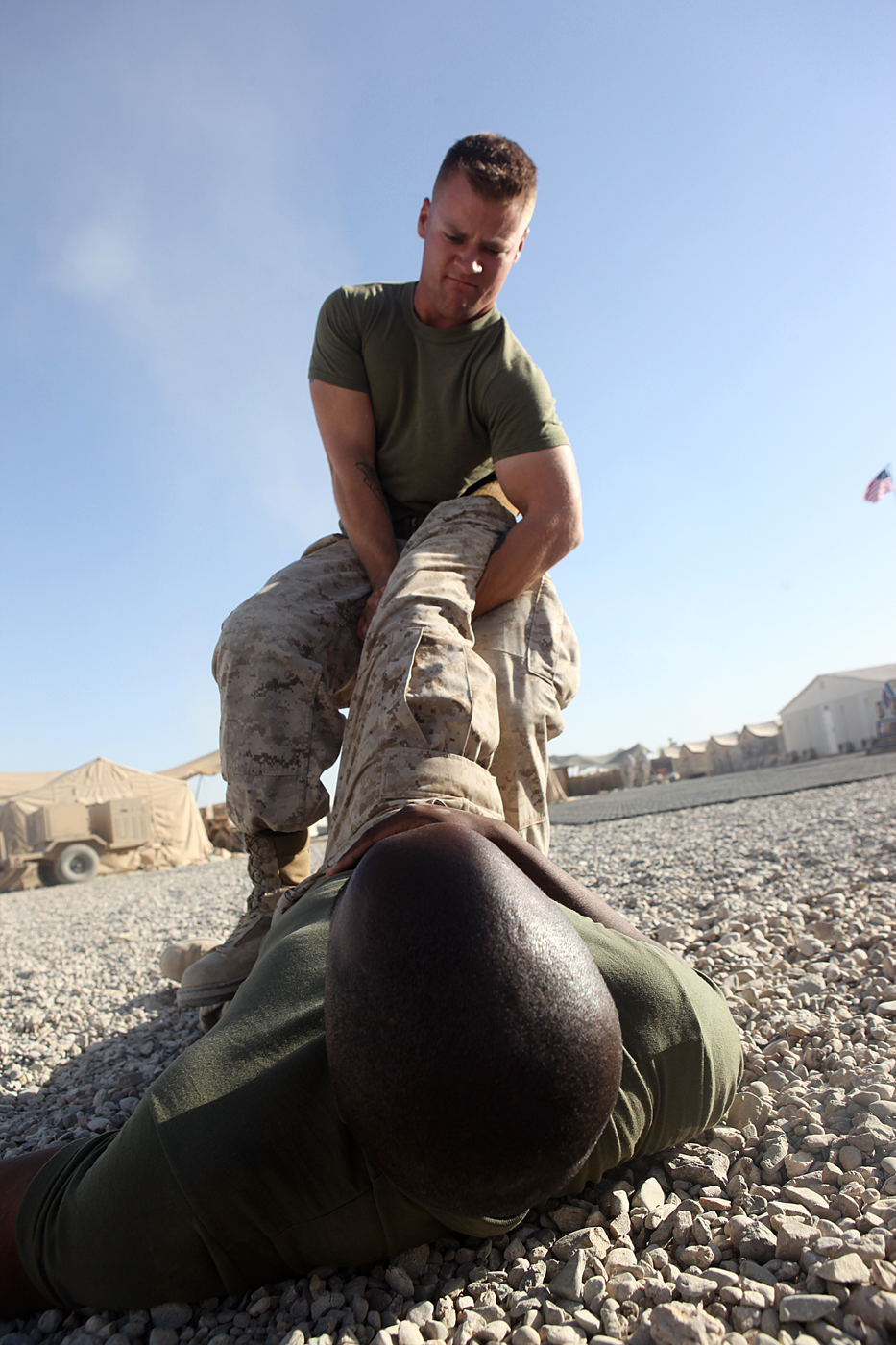
Your opponent suddenly drives their shin behind your knee, pins your foot down with the other hand, and before you even feel a joint being twisted, your calf is already crushed between shin bone and fibula with nowhere to go. The calf slicer doesn't win through rotation angle like most joint locks. It wins through raw muscle compression, and it's the technique that nearly ended Royler Gracie's night in Eddie Bravo's widely watched 2014 rematch. This entry breaks down its path from the compression-lock family to a systematized 10th Planet weapon, the mechanics of the wedge and grip, typical entry timing, strengths and limitations, common counters, and how it actually plays out under IBJJF rules and in competition data.
1. Origins: From the Compression-Lock Family to Eddie Bravo's Rematch
Like most joint locks, the calf slicer has no single traceable inventor. It belongs to the compression lock family, where the core idea is to drive a rigid bone, the shin or the forearm, into the back of an opponent's knee and crush the muscle rather than twist a joint angle. Early forms of this idea show up in both English catch wrestling and judo's ground game, though for a long time it wasn't treated as a mainstream finishing technique.
The Triangle That Shocked the World, Eleven Years Earlier
The competitor most responsible for bringing the calf slicer into the mainstream is American grappler Eddie Bravo (born Edgar A. Cano on May 15, 1970, in Santa Ana, California, and later known by his stepfather's surname; he got into jiu-jitsu in 1994 after watching Royce Gracie compete in the UFC). At the 2003 ADCC World Championship's 66kg quarterfinal, Bravo, still a brown belt at the time, faced four-time world champion (1996 to 1999) and three-time ADCC champion (1999 to 2001) Royler Gracie, then 37 years old. Bravo finished him with a triangle choke just under nine minutes in, one of the most famous upsets in grappling history. Shortly after, Bravo received his black belt from Jean Jacques Machado and founded his own no-gi system, 10th Planet Jiu Jitsu.
Eleven years later, on March 29, 2014, the two met again at Metamoris 3 in Los Angeles. The event ran on a no-points, submission-only format. In the closing stage, Bravo locked Gracie into what he calls the "vaporizer," a calf slicer stacked with a toe hold applying pressure at the same time. Gracie refused to tap, and the 20-minute clock ran out, ending the match in a draw. That near-finish rematch is why the calf slicer and Bravo's name are so tightly linked.
Bravo's two other signature techniques, the twister spinal lock and the rubber guard, already have their own full entries on this site (Twister entry, Rubber Guard entry), so we won't repeat that ground here. Within the 10th Planet system, the calf slicer is classified as one of the core finishes from the truck position, and it's the most common way that whole leg-entanglement system gets closed out.
2. Mechanics: The Wedge, the Grip and Hip Pressure
The core of the calf slicer is driving a rigid wedge into the back of the opponent's knee. Most practitioners use their own shin; some prefer the forearm. Both work similarly, and the choice mostly comes down to which one seats more securely in a given position.
| Stage | Key details |
|---|---|
| ① Establish leg entanglement control | Usually enters from the truck position, pinning the opponent's thigh and hip on that side to prevent them from pulling the leg free |
| ② Wedge into the knee pit | Drive the shin or forearm deep between the opponent's thigh and calf. The deeper the wedge, the harder it is for them to straighten the leg out and escape |
| ③ Pin the foot with the other hand | Grip and press the opponent's foot down, trapping the calf between the wedge and the fixed foot with nowhere to move |
| ④ Drive the hips forward to close the gap | Keep pressing forward with the hips to compress the gap, applying pressure slowly and evenly rather than in a sudden burst |
Unlike most joint locks, the calf slicer's force is compressive rather than rotational. Practitioners often describe the pain as arriving more abruptly, because muscle tissue's tolerance curve under pressure doesn't behave like a ligament or joint capsule, making it harder to gauge the danger threshold by angle the way you can with a joint lock.
3. Entry Timing and Setups
There are a few entry points practitioners commonly rely on for the calf slicer:
First, the truck position is the classic entry. This is the signature position of Eddie Bravo's 10th Planet system: the attacker traps one of the opponent's legs from behind or the side in a triangle-style hold, completely isolating the other leg and removing any base to fight back from. From here, wedging in and finishing the calf slicer is about as smooth a finish as the whole system offers.
Second, stepping over an entangled leg from top half guard. When an opponent uses half guard to hold your leg for defense or a sweep attempt, stepping around behind that leg often lands the wedge directly into the knee pit.
Third, when an opponent bends the knee defending a kneebar and walks right into it. Once an opponent realizes their leg is caught and tries to escape a kneebar, the instinctive reaction is to bend the knee to relieve pressure, but that bend actually pulls the calf closer to the attacker's wedge, a classic "defend one, get caught by another" moment in leg-lock scrambles.
4. Strengths and Limitations
| Strengths | Limitations |
|---|---|
| Loads muscle rather than a single ligament, so once the wedge is set it's not as easy to escape in a single burst the way a joint lock can be | IBJJF rules restrict it to brown belt and above, so lower and mid-belt practitioners can't use it in competition |
| Reachable from several common positions, including the truck, half guard and 50/50, giving it a rich set of setups | The wedge has to seat deep to be effective; a shallow wedge is easy to straighten out of |
| Often stacks with a toe hold into the "vaporizer" combination, applying compression and torque at the same time | Compression injury doesn't give the same clear angle-based warning a joint lock does, making it harder to judge risk if a tap is ignored |
5. Common Counters
Countering the calf slicer comes down to dorsiflexing and straightening out early, before the wedge fully seats:
First, flex your foot back toward you (dorsiflexion) immediately. This keeps your opponent from pinning the foot into a stable anchor point, and it's the first line of defense practitioners cite most often.
Second, straighten the trapped leg forward and elevate your hips. This disrupts the angle of their wedge and gives you room to work on breaking their grip.
Third, bring your free leg into the defense. Cross your feet or use the free foot to press against the trapped one for extra leverage.
What to do once you've escaped
If the wedge hasn't fully seated yet, the moment you straighten out is often also your chance to switch position or attack your opponent's now-exposed leg in return, with your own calf slicer or another leg lock.
If you can't fully escape in time, keep the foot dorsiflexed to buy time, and the moment the compression keeps building past what's tolerable, tap immediately rather than trying to grind it out to the last second. Muscle compression injuries often take longer to heal than expected.
6. Competition Frequency and Legality
According to submission-tracking database Digitsu, its tracked competition records show 46 calf slicer finishes, with 32.6% coming in gi and 67.4% in no-gi, and competitor William Tackett leading with 5 finishes (third-party statistic, accessed 2026/09). Overall, calf slicer finishes skew heavily toward no-gi, which tracks with both the rulebook and the fact that no-gi grapplers spend more time in truck and ashi garami-style leg entanglements where the technique naturally shows up.
| Technique | White/Blue/Purple | Brown/Black Gi | Brown/Black No-Gi |
|---|---|---|---|
| Straight ankle lock | Legal | Legal | Legal |
| Kneebar | Illegal | Legal | Legal |
| Calf slicer | Illegal | Legal | Legal |
| Toe hold | Illegal | Legal (outward pressure banned) | Legal (outward pressure legal since 2021) |
| Heel hook | Illegal | Illegal at all belts | Legal |
ADCC follows a similar tiering logic: intermediate and professional divisions may use the calf slicer legally, while it remains banned in the beginner division (rules as of this 2026/09 check).
7. Safety Notes
The calf slicer's risk profile differs from a joint lock: it compresses the calf muscle and surrounding soft tissue rather than simply stretching a single ligament, and if an opponent refuses to tap, sustained pressure can eventually affect structures around the knee joint as well. Readers wanting a deeper look at the biomechanics of calf compression, IBJJF grading and knee-safe escapes can find a fuller breakdown at our calf slicer mechanics and knee-safe escape deep dive (Chinese); we won't repeat the medical detail here.
・If the compression keeps building past what's tolerable, tap immediately rather than trying to hold out for an escape
・Drill slowly at first with a coach who knows the technique supervising wedge depth and the pace of pressure
・Never keep applying pressure after your partner has already tapped; release speed should match their tap signal
・White through purple belts should get comfortable with dorsiflexion defense and straightening out first before drilling the offensive side
FAQ
What is a calf slicer, and how is it different from a toe hold or kneebar?
A calf slicer wedges the shin or forearm behind the opponent's knee and pins the foot, compressing the calf muscle against the bone. A toe hold and kneebar, by contrast, are joint locks that twist a specific joint angle. The pain source is different too: muscle compression rather than ligament stretch, and practitioners often say the pressure builds up more abruptly than with a joint lock.
Can white belts drill the calf slicer?
Not in competition. As of this 2026 check of IBJJF rules, the calf slicer is restricted to brown belt and above in both gi and no-gi, with white through purple belts banned from using it entirely. ADCC rules follow similar logic, allowing it for intermediate and pro divisions while banning it for beginners. Gym drilling isn't bound by tournament rules, but it's best learned under a coach's supervision.
How do I escape a calf slicer?
Flex your foot back toward you (dorsiflexion) immediately, before your opponent can pin it down as a stable anchor point. Then straighten the trapped leg forward and elevate your hips to disrupt the angle of the wedge behind your knee, while also working to break their grip. If they've already locked it in, the moment you straighten out is often also your chance to switch position or attack their leg in return.
What's the connection between the calf slicer and the "vaporizer"?
The vaporizer is Eddie Bravo's combination of a calf slicer and a toe hold stacked together, applying compression to the calf and torque to the ankle at the same time. He used exactly this combination in the closing stage of his 2014 Metamoris 3 rematch with Royler Gracie, nearly finishing him with it before time ran out and the match was ruled a draw.
Why do calf slicer finishes show up so rarely in competition?
According to submission-tracking database Digitsu, the calf slicer already has relatively few recorded finishes overall, and most of them happen in no-gi. Part of the reason is that IBJJF restricts it to brown belt and above, narrowing the pool of competitors who can legally attempt it, and part of it is that an opponent who dorsiflexes early enough has a real chance of riding out the pressure until the tide turns (third-party statistic, accessed 2026/09).
References
1. BJJ Fanatics. Calf Slicer BJJ. bjjfanatics.com (accessed 2026/09; supports the wedge-into-the-knee-pit mechanism, entries from truck, half guard, turtle and mount, dorsiflexion defense, IBJJF's brown/black belt restriction and ADCC's intermediate-and-above rule)
2. Digitsu. Calf Slicer in BJJ: How It Works, Setups & Stats. digitsu.com (accessed 2026/09; supports the compression-lock mechanics, entries from truck, half guard and 50/50, and the third-party competition statistic of 46 finishes, 32.6% gi / 67.4% no-gi, with William Tackett leading at 5)
3. Wikipedia contributors. Eddie Bravo. en.wikipedia.org/Eddie_Bravo (accessed 2026/09; supports Eddie Bravo's biography, his 2003 ADCC triangle-choke win over Royler Gracie, receiving his black belt from Jean Jacques Machado, founding 10th Planet Jiu Jitsu, and using a calf slicer in the 2014 Metamoris match)
4. Wikipedia contributors. Royler Gracie. en.wikipedia.org/Royler_Gracie (accessed 2026/09; supports Royler Gracie's birth on December 6, 1965, his four world titles (1996-1999) and three ADCC titles (1999-2001), and the results of both his 2003 loss to Bravo and the 2014 Metamoris 3 draw)
5. Bloody Elbow. Metamoris 3: Gracie vs Bravo Results, Highlights and GIFs. bloodyelbow.com (accessed 2026/09; supports the play-by-play of the March 29, 2014 Metamoris 3 match, Bravo's use of the "vaporizer" calf-slicer-plus-toe-hold combination, Gracie's refusal to tap, and the match ending in a draw)
6. Evolve MMA. Where And When Are Leg Locks Allowed In BJJ? evolve-mma.com (accessed 2026/09; supports the IBJJF belt-level legality table for leg locks, including the calf slicer, kneebar, toe hold and heel hook at brown/black belt in gi and no-gi)