 YR Sports Lab

Your opponent is still hunting for a way through your open guard, and you have already spun underneath him and arrived on his back. The Berimbolo is jiu-jitsu's signature inverted back take: one De La Riva hook plus one rotation turns a passive guard into a direct entrance to the back. It also comes with an origin story nobody agrees on, and the man who named it flatly denies being its father. This guide walks through the Berimbolo's contested history, its step-by-step mechanics, the moments to enter, its strengths and limits, the standard counters, and where it sits in modern competition.
1. Origins: a technique with "no father"
Most accounts point to the same starting point: Marcel Ferreira, a purple belt training at the Carlson Gracie academy in the early 1990s. He spent long stretches playing the De La Riva hook, but his training partners worked out that simply pulling the hooked leg back and stepping away neutralised it. To beat that counter, Ferreira began rotating his whole body through, riding the tension of the hook to fold himself around to his opponent's side, and that solution grew into a full system of sweeps and back-taking transitions.
The move really surfaced through a different competitor: Samuel Braga. He used the inversion constantly in training as a purple belt and pulled it off in a decisive match at the World Championship, putting the technique under the lights of formal competition for the first time (reports disagree on the exact year, with some placing it in the 2002 purple belt final and others in 2005, so this article does not commit to one date). The name came from another legend: Andre Galvao christened the rotation "berimbolo", a Portuguese word closer to "to wind up" or "to twist". Galvao is Brazilian, co-founded the Atos jiu-jitsu academy with Ramon Lemos in 2008, and has collected multiple ADCC and IBJJF World Championship golds, enough standing in the sport that his name for the move stuck without further argument.
The man who named it denies being its father
Credit for the Berimbolo has been contested for years. Andre Galvao gave one widely quoted answer in an interview: "The berimbolo has no father. It was a poor kid born with no dad, but now that the kid is rich and famous, everybody wants to claim him." The line is quoted in independent write-ups by both Sensobjj and LowKick MMA, which tells you that even insiders regard the invention as unattributable. The more accurate description is that several people arrived at closely related solutions at different moments, and one name eventually gathered them all together.
What turned the Berimbolo into a black-belt-level mainstream weapon was the Mendes brothers (Rafael and Guilherme) in the 2010s. The pair co-founded the Art of Jiu-Jitsu academy in California, and Rafael took six IBJJF World Championship featherweight black belt golds (2010, 2011, 2012, 2014, 2015, 2016) plus two ADCC World Championship golds, bolting the Berimbolo onto a finishing option they refined themselves, the leg drag, and riding that combination to world title after world title. Right behind them came the Miyao brothers (Paulo and Joao), from Andirá in Paraná state, students of coach Cicero Costha, both promoted to black belt in 2013. They became known for a relentlessly aggressive Berimbolo and back control game, adding variations such as the crab ride and the twister hook that pushed the system in an even more intricate direction.
If you would rather start with the spinal, hip and knee loading involved in the inversion, along with full neck and hip protection recommendations, there is a separate medically focused deep dive on this site: Berimbolo inverted back take: spinal, hip and knee loading mechanics.
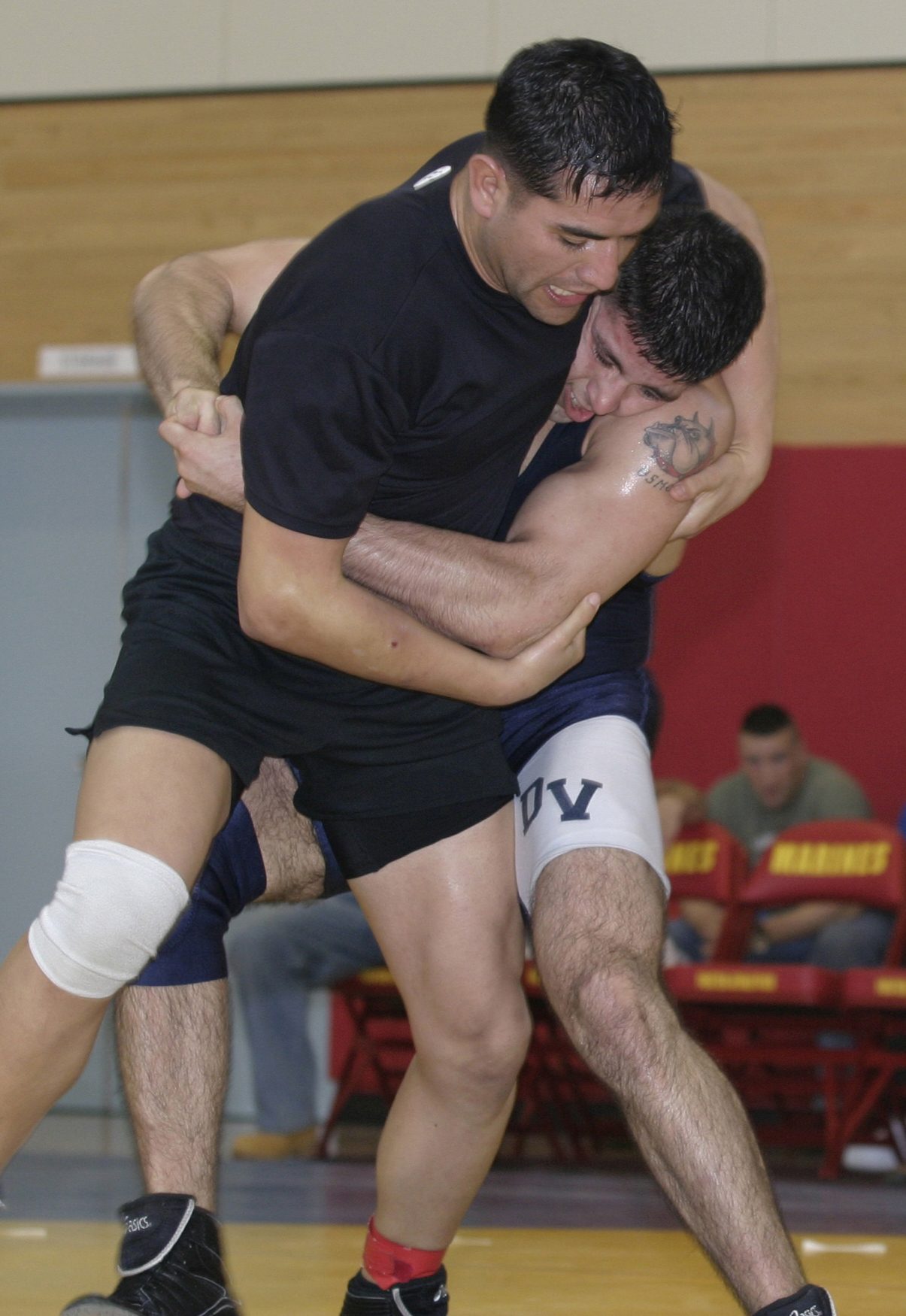
2. Step-by-step: from the hook to the back
The Berimbolo is an inverting technique inside the open guard system, and it starts from the hook structure of De La Riva guard. The whole sequence breaks into five phases:
| Phase | Key points |
|---|---|
| ① Establish the hook | The bottom player hooks the outside of the opponent's near leg with the outside foot (the De La Riva hook) and grips the sleeve or pant leg with one hand, building the basic tension structure |
| ② Break the angle | Use the free leg to push the opponent's hip or belt, drop his centre of gravity and drive his hips toward the mat, creating an off-line angle |
| ③ Switch grips | Both hands change in sequence between the ankle, the pant leg and the belt, and you must always keep at least one grip: releasing both at once forfeits the leverage on the opponent's base |
| ④ Invert into position | Ride the tension of the hook to fold your body between the opponent's legs and out the other side, with the shoulder briefly on the mat to drive the rotation, finishing turned toward his back |
| ⑤ Finish with the back take or leg drag | Once the rotation is complete you can climb straight onto the back and lock the seat-belt grip, or use the leg drag finish the Mendes brothers refined, passing first and hunting back control afterwards |
Because the whole thing is a continuous rotation with constantly changing grips rather than a single-point submission, it is very hard to represent faithfully in a handful of still frames. Work through it segment by segment with a coach or video instead of trying to force it from a text description alone.
3. Entry timing and setups
The Berimbolo is rarely launched out of nowhere. It typically appears in three classic scenarios:
First, when the opponent pulls his leg out to kill the De La Riva hook. This is exactly the situation Marcel Ferreira faced: the bottom player is fighting with the hook, the top player steps back to extract the hooked leg, and in that instant his weight shifts backwards, handing the bottom player a window to invert.
Second, when the opponent stands too upright in open guard with his centre of gravity high. A top player who stands tall while rushing to find a passing angle gives the bottom player far more room to work the ankle and pant grips, and phases ② and ③ of the angle break come much faster.
Third, as a counter inside a passing exchange. When the top player attacks with a knee cut or a side pass and the bottom player's hook has not been fully cleared, you can ride the opponent's forward pressure straight into the rotation, flipping defence into offence in a single beat.
In live rolling the Berimbolo also chains constantly with other systems: when the rotation stalls halfway, many players flow into 50/50 or retreat to De La Riva to reset, treating the Berimbolo as a hub inside the wider open guard system rather than as the only objective.
4. Strengths and limits
| Strengths | Limits |
|---|---|
| Converts a passive guard into an immediate back control threat | Demands high hip mobility and core coordination, a higher barrier than an ordinary sweep |
| The rotation branches into several options (back take, leg drag, 50/50) | Your legs and hips are briefly exposed mid-rotation, a well-known leg lock entry |
| In gi competition the belt and pant grips make it relatively easy to execute | Without cloth grips in no-gi, execution gets noticeably harder |
| Specialists can chain it into constant scrambles, forcing opponents into unfamiliar rhythms | If the opponent pressures early and refuses to step back, the space the rotation needs never appears |
5. Common counters
Defending the Berimbolo hinges on not stepping backwards once the hook is locked in: after the space for the rotation exists, shutting it down gets much harder. Three mainstream counters:
First, early prevention: don't retreat, drive down. The most fundamental answer is to avoid pulling your leg back the moment you feel the hook tension build, and instead keep your weight forward and pressure straight down into the bottom player, so the angle and space the rotation needs never materialise.
Second, grip your own pant leg and switch to the pigeon position. If your opponent has already built the hook and grips, pull the pant leg of your free leg back, turn your body into a pigeon-style posture, and flow into a cross-face pass from there, breaking the rhythm of the inversion.
Third, follow the rotation and fight for the last line of defence before the back. If the inversion is already deep, rather than resisting head-on, turn with the direction of your opponent's rotation so he cannot circle cleanly all the way behind you, and use your arms to occupy the seat-belt grip he is about to establish, jamming the final step before back control is set.
What the attacker still has after being countered
When the opponent simply pressures down and denies space, the attacker usually still holds a pant grip or an ankle, and can flow back into De La Riva or transition to 50/50 to reset the angle, rather than forcing the full rotation.
When the opponent switches to the pigeon counter-pass, his weight is moving forward too, so the attacker can turn the remaining pant grip into a hook sweep, or abandon the attack entirely and reset the guard to meet the incoming pass.
6. How often it shows up in competition
The IBJJF, ADCC and other governing bodies do not publish technique-level frequency counts, and there is no reliable public tally of Berimbolo attempt or success rates online (third-party statistics sites generally break results down only into broad submission and passing categories, never to the level of a single guard transition), so this article will not invent a precise-looking percentage with no source behind it. What is clear is that multiple jiu-jitsu industry retrospectives describe the years when the Mendes brothers dominated the IBJJF World Championship featherweight black belt division and the Miyao brothers rose alongside them in the 2010s as the Berimbolo's peak, when practically every gym had somebody drilling it. As leg lock systems and other passing styles have grown, competition tactics have diversified, but the Berimbolo remains a staple weapon for open-guard-oriented no-gi competitors and a standard part of the gym curriculum.
On the rules side, the Berimbolo is a guard and sweep transition rather than a submission, and no public IBJJF provision restricting the position itself by belt level could be found. What is governed by belt rules are the submissions you might chain into mid-rotation, such as a heel hook attempted after landing in 50/50, which falls under the belt-level rules for leg locks and has nothing to do with the Berimbolo position itself.
7. Safety notes
The Berimbolo is a compound movement built on continuous rotation with the head and neck briefly touching or bearing load, so unlike a straightforward submission its main risk is not being caught but loading your own bodyweight incorrectly onto the cervical spine or knee when the technique is not yet solid. The classic error is propping the mat with the crown of the head or the back of the neck through the turn instead of rolling across the shoulder to spread the load. Because the movement also asks for substantial rotation at the hip and knee, forcing it with an inadequate warm-up or limited flexibility easily produces torsional discomfort in the hip or knee joint.
・Roll across the shoulder to spread the load during the rotation; never let the crown of the head or the back of the neck take the weight
・Warm the hips and groin up dynamically before drilling, and reduce the range of the rotation when flexibility is limited
・If you feel clear discomfort in the neck or knee, stop immediately; do not grind out the full rotation
・For more on the spinal, hip and knee loading involved, see the deep dive on this site: Berimbolo inverted back take: spinal, hip and knee loading mechanics
FAQ
Can white belts train the Berimbolo?
There is no official belt restriction on the Berimbolo position itself, because it is a guard and sweep transition rather than a joint lock or a dangerous submission, so it does not sit in the same category as the leg locks and neck cranks that are explicitly ranked by belt level. Many gyms, however, wait until students have solid basic pass defence and hip mobility before teaching it, so a white belt who wants to learn it should check with a coach about how the curriculum is sequenced instead of drilling a high-difficulty inversion alone from videos.
Is the Berimbolo original to jiu-jitsu, or does it come from judo?
It is a jiu-jitsu original, born out of open guard sparring in jiu-jitsu gyms in the 1990s rather than adapted from a judo throw. The underlying idea of rotating to take the back does show up in wrestling and judo groundwork as well, but the specific hook and grip structure that makes the Berimbolo work is unique to jiu-jitsu.
What should I do when the Berimbolo fails and I get flattened back out?
In most cases you still hold one of your opponent's ankles or a pant grip, so you can flow into 50/50 or retreat back into De La Riva instead of treating the whole inversion as an all-or-nothing bet. When the angle is clearly dead and the pressure is too heavy, protect your neck first rather than forcing the full rotation, and reset from a safe guard position.
Why do so many people find the Berimbolo unusually hard to learn?
The bottleneck is hip mobility and the coordination of the core through the rotation, not simply memorising a sequence, because you need enough flexibility to fold your body into the space the hook creates and finish the full turn. Most coaches suggest getting the De La Riva hook and off-balancing solid first and only then adding the inversion, since forcing the whole thing at once tends to produce leaky mechanics or neck-loading errors.
Do you still see the Berimbolo in competition today?
Yes, especially among no-gi competitors who favour open guard and inversion-heavy styles, though the IBJJF and ADCC do not publish technique-level frequency data, so no precise rate can be given. Industry media generally describe the 2010s, when the Mendes and Miyao brothers dominated the black-belt featherweight division, as its peak; leg lock systems have since diversified competition styles, but it remains part of the standard jiu-jitsu gym curriculum.
References
1. SensoBJJ (reprinted from GracieMag). Berimbolo, The Most Popular Back Take in the Sport BJJ. sensobjj.com (accessed 2026/08; supports Marcel Ferreira developing the rotation at the Carlson Gracie academy in the early 1990s, and Andre Galvao naming the technique and describing it as having "no father")
2. Grapplezilla. The Berimbolo. grapplezilla.com (accessed 2026/08; supports Samuel Braga first landing the inversion in formal competition at the World Championship as a purple belt, plus the technical evolution added by the Mendes brothers' leg drag finish and the Miyao brothers' crab ride and twister hook)
3. LowKick MMA. The Berimbolo: BJJ Position/Technique. lowkickmma.com (accessed 2026/08; cross-checks the Marcel Ferreira origin account and the conflicting dates given for Samuel Braga's breakout World Championship match, plus the full Andre Galvao "no father" quote)
4. Wikipedia. Rafael Mendes. en.wikipedia.org; cross-checked against a second source, the Art of Jiu-Jitsu official athlete profile artofjiujitsu.com (accessed 2026/08; both support Rafael Mendes' nationality, his Art of Jiu-Jitsu background, his 2009 black belt promotion by Ramon Lemos, and his record of six IBJJF World Championship featherweight black belt titles plus ADCC golds in 2009 and 2011)
5. Wikipedia. Andre Galvao. en.wikipedia.org; cross-checked against a second source, Elite Sports, "Andre Galvao, The King of Grappling" elitesports.com (accessed 2026/08; both support Andre Galvao's Brazilian nationality, his co-founding of the Atos jiu-jitsu academy with Ramon Lemos in 2008, and his multiple ADCC and IBJJF World Championship medals)
6. Wikipedia. Paulo Miyao. en.wikipedia.org; cross-checked against a second source, Elite Sports, "Paulo Miyao, Aggressive BJJ Black Belt" elitesports.com (accessed 2026/08; both support the Miyao brothers' origins in Andirá, Paraná, their training under Cicero Costha, and their simultaneous promotion to black belt in 2013)