 YR Sports Lab
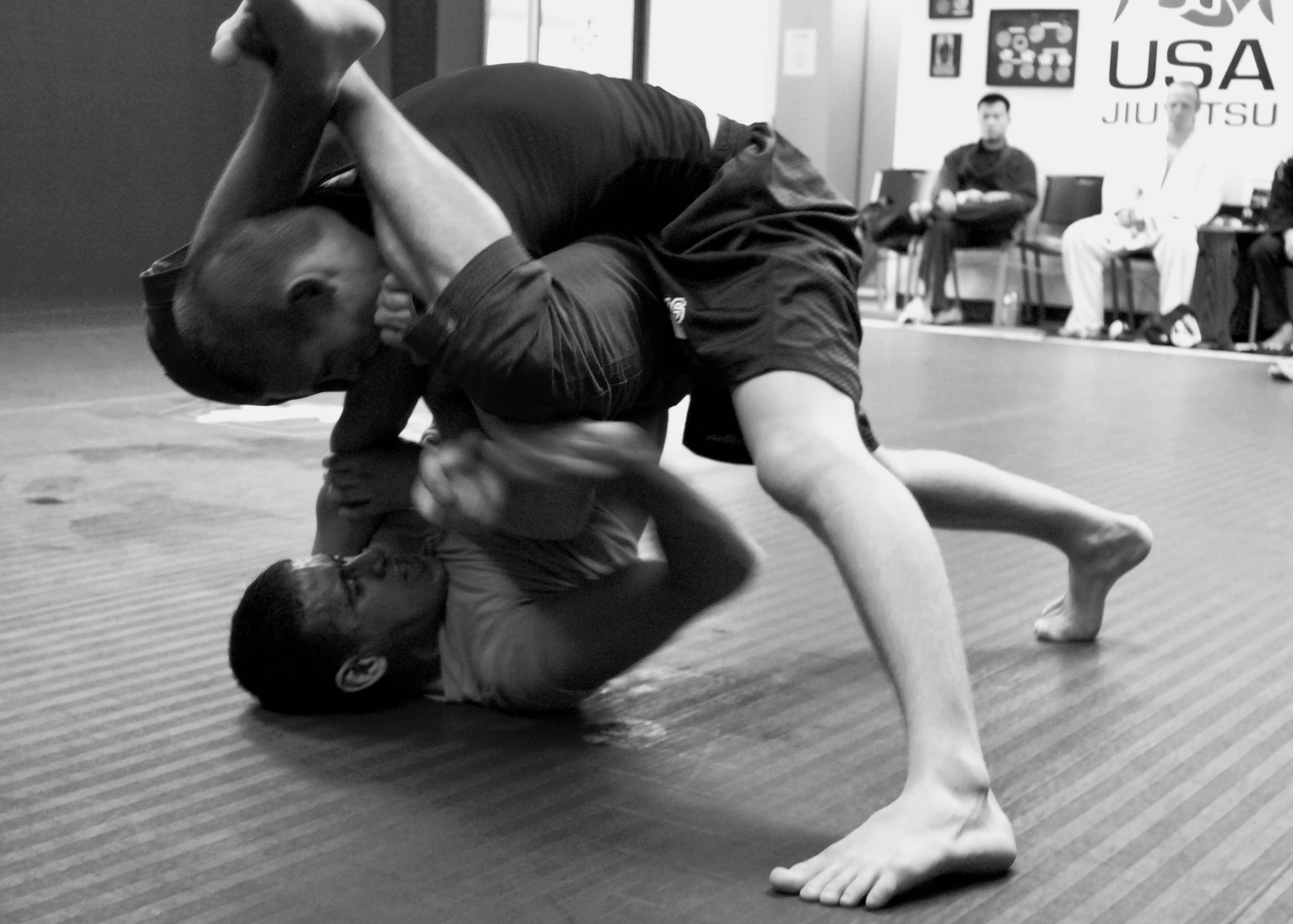
Your opponent balls up in turtle position, and you lean in, grab their outside knee with one hand and their ankle with the other, then pull both hands and legs in opposite directions at once. A second later their hip looks like it's being pried apart by force. That's the Banana Split, a compression submission that targets the groin and hip adductors, finishing by forcing both legs apart in opposite directions. The name sounds like a dessert, but the move is anything but sweet, and its lineage runs through an unexpected MMA submission from 2002 and Eddie Bravo's rulebook-rewriting 10th Planet system. This entry breaks down where the name comes from, its technical structure, three entry timings, strengths and limitations, common counters, and how it's treated under modern competition rules.
1. Origins: A Named Creator Behind a Dessert's Name
Start with the easy part: Wikipedia's entry on Eddie Bravo states plainly that he is credited as the one who named and created the move ("Bravo is credited with the naming and creation of the Banana Split submission hold"). The move forces the opponent's legs apart in opposite directions, and the resulting image resembles a banana split dessert sliced lengthwise down the middle, which is exactly why the name stuck and why English-speaking jiu-jitsu and MMA communities still use it today.
The figure most responsible for turning it into a fixture of modern no-gi instruction is Eddie Bravo himself, founder of 10th Planet Jiu-Jitsu. Wikipedia's entry and combat media outlet Elite Sports's write-up cross-check on the key facts: Eddie Bravo was born Edgar A. Cano on May 15, 1970, and later took the surname "Bravo" from his stepfather out of gratitude for how he was raised. He earned his black belt under Jean Jacques Machado, and while still a brown belt at the 2003 ADCC World Championship, he submitted legendary competitor Royler Gracie with a triangle choke in the quarterfinals, one of the biggest upsets of that year, with both Wikipedia and a separate athlete profile on GoldBJJ recording the same finish and the same opponent. That same year, after returning to the U.S., he founded 10th Planet Jiu-Jitsu in Los Angeles, built around no-gi training and a vocabulary of positions unlike anything in traditional academies, including the rubber guard, the truck position and the lockdown half guard system. Combat media outlet Evolve Daily's breakdown of 10th Planet's core moves notes that truck is the shared entry point for a family of finishes including the twister; the Banana Split itself can also be entered directly from truck (twister side control), covered in the mechanics section below.
A move that's often confused with a different one
MMA fans are more likely to know the "Suloev Stretch," named after Russian fighter Amar Suloev. His Wikipedia-recorded fight record shows he submitted Paul Cahoon with a leg stretch in just 63 seconds at "2H2H 5" in Rotterdam, the Netherlands, on October 13, 2002; combat media outlet FloGrappling separately reports that MMA journalist KJ Gould formally coined the name "Suloev Stretch" in 2013 (the two sources cross-check on these points).
But the Suloev Stretch is applied from back control, pulling one ankle toward the head and targeting the hamstring and knee, while the Banana Split is usually applied from truck or lockdown and targets the groin and hip adductors. The two only look alike in that both visibly force the legs apart, the entry position and the joint or muscle group under load are completely different, which is exactly why non-grappling audiences tend to lump them together.
2. Mechanics: From the Lockdown Switch to the Double-Direction Stretch
The Banana Split has several common entries, and the most frequent starts from the half guard lockdown, per the teaching breakdown from BJJ Fanatics:
| Stage | Key details |
|---|---|
| ① Establish the lockdown | From half guard, trap one of the opponent's legs with a figure-four lockdown to set up basic control |
| ② Break their posture | Lift the trapped leg toward the opponent's ear, forcing their upper body forward and breaking their base |
| ③ Switch legs to go deeper | Loosen the lockdown slightly, thread your other leg under the opponent's free leg, and hook that leg over your shoulder |
| ④ Re-secure the lockdown | Reset the lockdown on the opposite side, tighter than the first time |
| ⑤ Arch and stretch | Push your hips back, arch your spine, pull the trapped leg toward your chest while extending the shouldered leg the opposite way |
| ⑥ Finish | Both of the opponent's legs are forced apart in opposite directions, loading the groin and hip adductors until they tap |
Beyond the lockdown version, BJJ Fanatics's breakdown also covers two other common entries: from truck (twister side control), hooking the opponent's top leg directly and locking the opposite ankle to finish the stretch; and when an opponent chooses to turtle, using a cross-body ride pinned across their back to reach around and secure the opposite hip and leg for the same finish. All three entries end with the same finishing mechanic, the difference is only which control position you establish first.
3. Entry Timing and Setups
There are three common windows to enter the Banana Split:
First, when the opponent tries to stand and pass out of your half guard lockdown. Once a leg is trapped in the lockdown, an opponent who insists on standing to fight for passing angle is loading their own weight onto the trapped leg, exactly the moment to break their posture and switch legs deeper.
Second, the instant the opponent commits to turtle and exposes their back or side. An opponent who balls up to defend a back take will often briefly leave a knee or ankle unprotected, and pinning them with a cross-body ride to reach around and secure that leg turns their back-defense moment directly into a Banana Split threat.
Third, from knee-on-belly or side control, when one of the opponent's legs is still within reach. If the leg an opponent is using to resist is still caught inside your control during a side-position battle, reaching around to lock the opposite ankle and complete the stretch is a common way to convert existing top control directly into a finish.
4. Strengths and Limitations
| Strengths | Limitations |
|---|---|
| Targets muscle stretching rather than joint rotation, so pain feedback is immediate and it's less likely to cause ligament damage without warning | Against a flexible opponent with strong hip adductors, the stretch often isn't enough to force a tap |
| Truck and lockdown are core positions of the 10th Planet system, so the Banana Split shares entries with the twister, calf slicer and other finishes, giving it strong tactical continuity | Establishing the lockdown and switching legs deeper both require a control transition, and any gap in between is a window for the opponent to escape |
| Works under both gi and no-gi rules, with no dependence on collar or pant grips | If the stretch fails and control isn't reclaimed, the opponent can stand up or reverse into top position |
5. Common Counters
Countering the Banana Split comes down to not letting the opponent complete the leg switch:
First, curl the trapped leg inward. The moment you feel a leg getting locked, curl it in toward your body to shrink the angle your opponent can pry open, shortening their lever arm and blunting the stretch.
Second, push the opponent's hips away to create distance. Use your hands or your free leg to push the opponent's hips outward, prioritizing distance over just trying to free the trapped leg.
Third, stand up during the leg-switch window. The lockdown loosens momentarily while the opponent switches legs to go deeper, and posting your hips and standing up during that window is far easier than escaping after the double-direction stretch is fully locked in.
Don't rush forward the instant you escape
Once you've escaped, the instinct for most practitioners is to immediately press forward and reclaim control, but the opponent's lockdown system is often still intact, and pressing forward carelessly risks getting wrapped up again.
A steadier approach is to confirm both your legs are fully clear of the opponent's wrap and get your base set before deciding whether to pass or create more distance and reset.
6. Competition Frequency and Legality
The Banana Split isn't a high-frequency finish like the rear-naked choke or armbar. Multiple technique write-ups note that it accounts for a small share of overall finishes and shows up most often in no-gi, finish-focused rulesets like ADCC, EBI and WNO, typically as an extension of truck or twister control rather than a standalone primary weapon (third-party technical summary, accessed 2026/09). Combat media outlet Elite Sports's 2026 guide notes that ADCC bans this style of compression splitting submission in its beginner divisions, on the reasoning that less experienced competitors often can't judge in time whether to tap before the stretch fully locks in (third-party competition rules summary, accessed 2026/09).
On the rules side, combat media outlet Elite Sports's 2026 guide notes that the Banana Split is banned for competitors aged 4 to 12 in IBJJF tournaments, and prohibited for anyone under 18 across grappling more broadly (third-party rules summary, accessed 2026/09; IBJJF's official rulebook is updated periodically, so competitors should confirm against the current edition ahead of any specific event). That source doesn't lay out a belt-by-belt restriction list for adults the way it would for the straight ankle lock, heel hook or kneebar, in other words, nothing found in the sources reviewed singles out the Banana Split for adult belt-level restrictions, which is exactly why this move often comes up when instructors compare submission legality across belt levels, though the current IBJJF rulebook remains the authority on the full rule set.
7. Safety Notes
The Banana Split applies pain through muscle stretching rather than the kind of rotational joint pressure that can cause ligament damage before significant pain registers, but pushing the groin and hip adductors past an individual's flexibility limit can still cause an acute muscle strain. A systematic review and meta-analysis published in British Journal of Sports Medicine, looking at the general athletic population, found that athletes with stronger hip adductors have a meaningfully lower risk of future groin pain, while abductor strength and the adductor-to-abductor ratio showed no clear relationship to that risk, suggesting training emphasis should go toward adductor strength specifically. A separate integrative systematic review of jiu-jitsu practitioners found that the knee, chest and ribs, and shoulder are the most commonly injured regions in jiu-jitsu overall, with hip and groin injuries relatively underreported in the existing literature, though that doesn't mean a technique that directly loads the hip adductors carries no risk, the risk is simply concentrated in specific situations (applying the stretch too fast, or a large flexibility mismatch between partners) rather than being broadly common. For more on adductor strain mechanisms and rehab protocols, see our Groin Strain deep dive; for other leg attacks built off the truck system and their belt-based risk tiers, see our BJJ Leg Lock Risk Guide.
・Apply the stretch gradually rather than cranking it tight all at once, give your partner time to feel it and tap
・Hip flexibility varies enormously between individuals, don't judge how much angle your partner can take by your own flexibility
・Beginners should drill the lockdown and truck control transitions first and leave the finishing stretch until a coach confirms the fundamentals are solid
・Confirm both partners' familiarity with this kind of compression submission before drilling, to avoid injury from a mismatch in force or speed
FAQ
Can white belts use the Banana Split?
Mostly, yes. Nothing found in the rules summaries reviewed lists the Banana Split on a belt-by-belt restriction table the way straight ankle locks or heel hooks are. The restrictions actually documented are an IBJJF ban for competitors aged 4 to 12, a broader grappling-industry restriction for anyone under 18, and an ADCC ban in beginner divisions. In practice, most gyms still have newer students drill the lockdown and truck control first and leave the finishing pressure to a coach's guidance, since not being explicitly restricted isn't the same as a beginner being ready to crank it at full force.
Is Banana Split the same move as the Suloev Stretch?
No, the two are commonly confused but mechanically different. The Suloev Stretch is applied from back control, pulling one of the opponent's ankles toward their head and targeting the hamstring and knee. The Banana Split is usually applied from truck or lockdown, using both legs to pry the opponent's legs apart in opposite directions, targeting the groin and hip adductors. They only look similar in that both visibly force the legs apart, the entry position and the joint or muscle group under load are entirely different.
How do I escape a Banana Split?
The moment you feel one leg getting trapped, curl that leg in toward your body to shrink the angle your opponent can pry open, while using your free leg or hands to push their hips away and create distance. If they're still in the process of switching legs to deepen the lockdown, that's usually your best window, posting your hips and standing up before the double-direction stretch is fully locked in is much easier than escaping after it's set.
Where does the name "Banana Split" come from?
Wikipedia's entry on Eddie Bravo credits him as the one who named and created the move. The name itself comes from a visual comparison: the move forces the opponent's legs apart in opposite directions, and the resulting image resembles a banana split dessert sliced lengthwise down the middle, which is exactly why the name stuck.
Is this move high risk for injury?
It applies pain through muscle stretching rather than a rotational joint lock, so it's less likely than something like a heel hook to cause ligament damage before pain is felt. But pushing the groin and hip adductors past someone's individual flexibility limit can still cause an acute muscle strain. Research shows athletes with stronger hip adductors have a lower risk of groin pain, so keeping adductor strength work in your training program is a practical way to lower your risk.
References
1. Wikipedia contributors. Eddie Bravo; 10th Planet Jiu Jitsu; Elite Sports. Crazy List Of Eddie Bravo Facts; GoldBJJ. Eddie Bravo: Jiu Jitsu Athlete Profile; Evolve Daily. 10th Planet Jiu-Jitsu 101: The 4 Moves You Need To Know. en.wikipedia.org/Eddie_Bravo, en.wikipedia.org/10th_Planet_Jiu_Jitsu, elitesports.com, goldbjj.com, evolve-mma.com (accessed 2026/09; Wikipedia and Elite Sports cross-check on Eddie Bravo's birth name Edgar A. Cano, his May 15, 1970 birth date, and his adopting his stepfather's surname Bravo; Wikipedia's Eddie Bravo entry also explicitly credits him as the one who named and created the Banana Split; his 2003 ADCC triangle-choke submission of Royler Gracie as a brown belt is separately cross-checked against a GoldBJJ athlete profile; the founding of 10th Planet Jiu Jitsu in 2003, its no-gi focus, and its emphasis on leg attacks come from Wikipedia's 10th Planet Jiu Jitsu entry; the claim that truck is a shared entry point into the twister comes from Evolve Daily, which does not state whether the Banana Split or calf slicer are entered from truck as well)
2. Wikipedia contributors. Amar Suloev; FloGrappling. The Suloev Stretch at ADCC Trials: What Is It and How Does It Work? en.wikipedia.org/Amar_Suloev, flograppling.com (accessed 2026/09; Wikipedia's fight record supports the October 13, 2002 "2H2H 5" event in Rotterdam, the Netherlands, and the 63-second submission of Paul Cahoon; FloGrappling supports the 2013 naming by KJ Gould and the targeting of the hamstring and knee as distinct from the Banana Split's entry position)
3. BJJ Fanatics. BJJ Banana Split. bjjfanatics.com (accessed 2026/09; supports the step breakdown of the lockdown, truck and turtle entries described in the mechanics section)
4. Elite Sports. Banana Split Submission Jiu Jitsu: The Ultimate 2026 Guide. elitesports.com (third-party rules summary, 2026 edition, accessed 2026/09; supports the statements on ADCC's beginner-division ban, the IBJJF ban for competitors aged 4 to 12, and the broader grappling-industry restriction for anyone under 18; this source does not lay out a belt-by-belt restriction list for adults)
5. Santos SP, et al. (2024). Epidemiology of Injuries and Their Implications in Jiu-Jitsu Practitioners: An Integrative Systematic Review. Rev Bras Ortop;59(3):e364-e371. PubMed PMID 38911890 (supports the statement that the knee, chest/ribs and shoulder are the most commonly injured regions in jiu-jitsu overall, with hip and groin injuries relatively underreported)
6. Quintana-Cepedal M, et al. (2025). Is hip adductor or abductor strength in healthy athletes associated with future groin pain? A systematic review and meta-analysis. Br J Sports Med. PubMed PMID 39532315 (supports the statement that stronger hip adductor strength is associated with lower groin pain risk; the study population is general athletes, not jiu-jitsu specific)