 YR Sports Lab
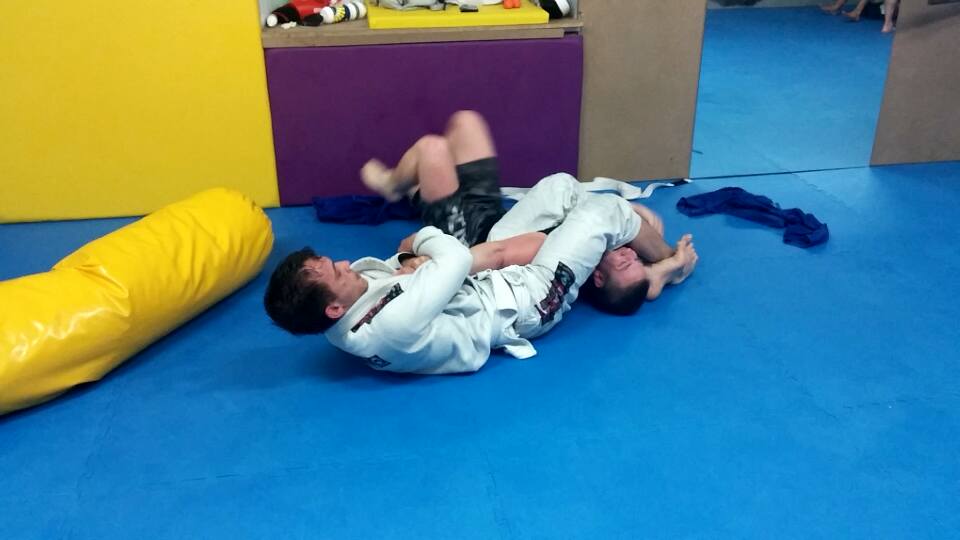
Your opponent drags your arm into an armbar, you fight with everything you have to keep the elbow bent, and after three or five seconds of stalemate something pops deep in the elbow crease, followed by a tearing, burning sensation and an arm that suddenly has nothing to give. If you look down and the thick tendon cord you could normally feel at the front of the crease is gone, and the muscle of your upper arm has balled up toward the shoulder, this is probably not a strain but a distal biceps tendon torn clean off the radius. The injury is genuinely rare in the general population, yet it sits in ambush inside one of the most common exchanges in jiu-jitsu, and its treatment window expires. This article uses the literature to break down the anatomy and mechanics, why the grappling population is at elevated risk, how to use the Hook Test as a self-screen, what the 4-week surgical window really means, and what the return-to-sport data say.
1. Understanding the tendon: the biceps is not mainly an elbow flexor
The biceps brachii has two proximal heads: the long head crossing the shoulder joint and the short head arising from the coracoid process. What actually fails in an armbar, though, is the distal end, where the muscle converges into a single cord that dives deep into the elbow crease and attaches to the radial tuberosity. It is a surprisingly small footprint, and the force of the entire muscle funnels onto that little patch of bone.
Most people assume the biceps is primarily an elbow flexor. In reality, its least replaceable job is forearm supination, turning the palm from face-down to face-up. Elbow flexion is shared with the brachialis and brachioradialis, so plenty of people can still bend the elbow after the distal biceps tendon has ruptured, which is exactly why the injury is so often diagnosed late. The clinical literature states it plainly: other elbow flexors let patients still flex the elbow to a considerable degree, so the tear is easy to miss.
For jiu-jitsu players, supination strength is anything but a footnote. Grabbing a sleeve and rotating the wrist, twisting after a collar grip to create leverage, the rotational control behind the Kimura and the Americana, even simply turning an opponent's arm the right way up, all of it runs through supination. Losing this tendon means losing the twisting control that sits at the core of grappling, which is why athletic populations treat this injury far more aggressively than sedentary ones.
One more structure is easy to overlook: the lacertus fibrosus, also called the bicipital aponeurosis, a fibrous sheet that fans out from the biceps tendon and covers the forearm flexor group. If it remains intact after a complete rupture, it acts like a safety line that tethers the retracting tendon and keeps the muscle from riding too far up the arm. That detail becomes critical when we get to the surgical window.
2. Rupture mechanics: eccentric load onto a two-centimeter footprint
The classic mechanism of distal biceps rupture is remarkably consistent across the literature: the tendon takes excessive eccentric tension while the elbow sits in flexion. Eccentric contraction means the muscle produces force while being forcibly lengthened, the most vulnerable loading mode for any tendon. The five-year epidemiological study published in 1998 described it explicitly: every case in that series arose from an arm being pulled open from a flexed position by excessive eccentric tension.
Translate that sentence into a picture on the mat and you get the standard armbar defense. Your opponent is already on their back, legs clamped over your arm, hips driving upward, and your only resistance is to flex the elbow as hard as possible and lock your hands together to stop it straightening. Your biceps is contracting at maximum effort while an external force keeps dragging the forearm toward extension. That is textbook eccentric overload, and the endpoint of all that force is the small footprint on the radial tuberosity.
Cadaveric research supplies concrete numbers: the tensile failure load of the distal biceps tendon is roughly 204 newtons (about the same as a 20.8 kg static pull, though instantaneous peaks in real sport go far higher). The literature also notes that it remains unclear which flexion angle is most vulnerable, so there is no simple answer of the form "bend to this angle and you are safe."
Why the grappling population fits this risk profile so precisely
The annual incidence of distal biceps rupture in the general population is only about 1.2 to 2.55 cases per 100,000 person-years, a genuinely rare injury. Yet the demographic portrait overlaps heavily with the regulars in any academy: over 95% of cases occur in men, the peak age is 35 to 54 (most studies report a mean age between 47 and 50), and about 86% involve the dominant arm.
Known risk factors include smoking, elevated BMI, participation in contact sports and anabolic steroid use. The smoking effect is the most striking: the 1998 study found that although smokers made up only about 9% of that insured population, their relative risk of rupture was 7.5 times higher. The literature speculates that nicotine impairs tendon microcirculation and drives degeneration at the insertion. In other words, a 40-year-old male purple belt who smokes and trains hard sits right at the intersection of every risk factor for a rare injury.
3. The Hook Test: a thirty-second self-screen
The biggest clinical trap with this injury is that the elbow still bends. Because the brachialis and brachioradialis compensate for flexion, many people test the elbow after the injury, find that it still moves, call it a strain and go home to ice it. By the time supination weakness drives them to a clinic two or three months later, the treatment options have shrunk dramatically.
The most reliable physical exam is the Hook Test described by O'Driscoll, and it could hardly be simpler: flex the injured elbow to 90 degrees with the forearm fully supinated (palm up), then have the examiner slide an index finger into the crease from the lateral side and try to hook the thick tendon cord from outside in. With an intact tendon the finger catches a rope-like structure and can lift it; with a complete rupture the tendon has already retracted, the crease is empty and there is nothing to hook.
Its diagnostic performance is excellent: the literature reports 100% specificity and roughly 80 to 100% sensitivity for acute complete ruptures, and pairing it with the biceps crease interval test yields 94% sensitivity with 100% specificity. Combined with the Popeye sign (the muscle belly retracting into a ball) plus bruising and a hollow in the crease, interpretation is usually straightforward. The caveat is that these tests are markedly less sensitive for partial tears, where clinicians turn to resisted variants or provocative tests and usually need ultrasound or MRI for confirmation.
| Sign / test | How to check | Finding in complete rupture | Diagnostic value |
|---|---|---|---|
| Hook Test | Elbow at 90°, supinated, index finger hooks the cord from the lateral side | No cord can be hooked | Specificity 100%, sensitivity 80–100% |
| Biceps crease interval | Measure crease to distal edge of the muscle belly | Distance clearly lengthened | 94% sensitivity when paired with Hook Test |
| Popeye sign | Look at the shape of the upper arm muscle belly | Belly balls up toward the shoulder | Supportive observation, not diagnostic |
| Supination weakness | Turn palm up against resistance, compare sides | Injured side clearly weaker | Functional evidence, may appear late |
| Crease bruising / hollow | Observe 1–3 days after injury | Bruising at the front of the crease, empty on palpation | Supportive sign |
*Test performance figures are drawn from reviews on the evaluation and management of distal biceps tendon rupture and from Hook Test reliability and validity research. Sensitivity for partial tears is substantially lower, and no self-screen can replace a physician's physical examination and imaging.
4. The 4-week golden window: why "observe for a month" is the wrong plan
This is the most important section of the article. The treatment options for a distal biceps rupture shrink rapidly with time, and the dividing line arrives far earlier than most people expect.
The literature defines the first 4 weeks after injury as the acute phase. Inside that window the tendon has not retracted far and surrounding scar adhesion is limited, so the surgeon can usually pull the original tendon back to the radial tuberosity and perform a single-stage anatomic repair with suture anchors or a cortical button. Past 4 weeks, tendon retraction plus muscle contracture often forces a reconstruction using a tendon graft, and complexity, cost and complication risk all rise together.
The only buffer comes from the lacertus fibrosus mentioned earlier: the literature notes that if the lacertus fibrosus is intact and the tendon has not retracted appreciably, direct repair remains feasible up to roughly 3 months after injury. But that is luck, not a plan. You cannot tell on the mat whether your aponeurosis tore along with the tendon, so the correct strategy is to treat 4 weeks as a hard deadline.
Surgery is not risk-free either. Pooled data put the overall complication rate after repair at about 25% and major complications at about 5%. The most common is lateral antebrachial cutaneous nerve (LABCN) palsy from the anterior single-incision approach, usually a transient sensory disturbance; the two-incision technique carries a distinct concern for radioulnar synostosis. These are worth asking about when discussing the surgical approach.
5. Return-to-mat data: 97.5% back to sport in a mean 6.2 months
For practitioners already diagnosed and repaired, the prognosis in the literature is reassuring. A systematic review in athletes pooled 10 studies and 157 athletes, mean age 40.5 years, 66% injured on the dominant arm, 77% acute ruptures, with a mean follow-up of 25.7 months. The result: 153 athletes (97.5%) returned to sport, taking a mean of 6.2 months.
That review offered two findings that are directly useful for planning training. First, return time showed no significant association with the rehab approach: neither post-operative immobilization (P = .539) nor the use of a particular strengthening protocol (P = .155) separated the groups, with 79% using two weeks of immobilization and 24% none at all. Second, athletes who did resistance training returned significantly earlier (P = .001), presumably reflecting pre-injury strength and rehab adherence. As for residual symptoms, the review reported reduced pronation-supination range in 40% and reduced flexion-extension range in 17%. Clinically, return to work usually lands at 3 to 4 months post-op.
Choosing not to operate carries a well-defined price. Data from Morrey and Nesterenko show that non-operative patients lose on average 40 to 50% of peak supination strength and about 30% of peak elbow flexion strength. Freeman and colleagues, on the other hand, argue that despite the strength deficits, functional outcomes after conservative care remain acceptable, with slightly weaker supination and no meaningful flexion weakness. That apparent contradiction really comes down to who "acceptable" is being measured for: for a desk worker, a 30% flexion deficit may go unnoticed; for a grappler who leans on supination to twist an opponent's wrist three times a round, a 40 to 50% supination deficit is a concrete technical downgrade.
Training and rolling habits that lower eccentric-overload risk
Recalibrate your tap threshold earlier: when an armbar is locked in, the moment to tap is during the seconds when the elbow is not yet straight and you are still holding a maximal-effort flexion stalemate, not once it hurts. That stalemate is precisely the peak of the eccentric load. Three seconds of stubbornness buys a six-month recovery, and the numbers make that a terrible trade.
Build an eccentric base: treat eccentric load as a training variable rather than an accident. Slow-eccentric chin-ups and biceps curls (3 to 4 seconds on the lowering phase), Zottman curls and dedicated supination work (resisted supination with a hammer or a weighted bar) build both tendon tolerance and supination function. The faster return seen in resistance-trained athletes indirectly supports the value of that base.
Modifiable risk factors: the 7.5-fold relative risk from smoking is the largest of all known factors and also the most reversible one. Anabolic steroids sit on the same list. Neither requires any equipment to change.
- Coaching: white belts and beginners drilling armbar defense should be told explicitly that a flexion stalemate is not a safe position, but a transition into changing angles, turning the hips and stacking the hands to walk out.
- Age: men over 35, on the dominant arm, carrying extra body weight, fit the high-risk profile, and the frequency and intensity of competitive rolling deserve individual adjustment.
- Warm-up: before jumping straight into hard rolling, do two or three light sets of supination and elbow flexion to bring the tendon into working range.
6. Differential diagnosis: not every sore elbow crease is a rupture
Pain at the front of the elbow crease has more than one cause. Distal biceps tendinopathy is insertional degeneration from repeated gripping and pulling, presenting as gradual soreness that worsens with grip, but the cord is still palpable and the Hook Test is negative. Partial tears sit in between, and the Hook Test loses sensitivity there, so imaging is required. Beyond that, brachialis strain, anterior elbow bursitis and ulnar collateral ligament (UCL) injury as well as simple capsular contusions can all present as discomfort in the crease.
The Hook Test described here is therefore a triage tool for deciding whether to book an appointment now, not a diagnostic tool. There is only one right response to a positive result: get to an orthopedic or sports medicine clinic quickly for a proper physical exam and ultrasound or MRI. A negative result with persistent symptoms also warrants a visit, because partial tears are exactly the category a self-screen is most likely to miss.
Make "heard a pop, booked an appointment" a reflex
The literature strings together a clear causal chain: when the distal biceps tendon takes eccentric overload in a flexed elbow position, tension concentrates onto a small footprint at the radial tuberosity with a failure load around 200 newtons, and it avulses. The armbar-defense stalemate of maximal flexion against continuous extension is a perfect reproduction of that mechanism. The injury has a general-population incidence of only about 1.2 to 2.55 per 100,000 person-years, but its risk profile of 95% male, ages 35 to 54, 86% dominant arm, contact sport plus smoking, overlaps heavily with the core academy population.
The action items that follow from the data come in two layers. Before injury: since the seconds of flexion stalemate are the tension peak, the most effective intervention is not a brace or a stretch but moving your tap threshold earlier, plus quitting smoking and building an eccentric strength base. After injury: the Hook Test takes thirty seconds, and what it protects is a treatment window that closes at 4 weeks, after which a direct repair may become a graft reconstruction.
Worth remembering are those two numbers, 97.5% and 6.2 months: handled inside the window, the return-to-sport rate for athletes is very high. The variable that decides the outcome is usually not surgical technique but what you decide in the 4 weeks after that pop in your elbow crease. Drilling "no cord, book an appointment" until it is as automatic as tapping is the most practical output of this literature review.
FAQ
How do I tell a distal biceps rupture from an ordinary elbow strain?
Three features matter: an audible or palpable pop at the moment of injury, the disappearance of the thick tendon cord you can normally feel at the front of the elbow crease, and the muscle belly bunching up toward the shoulder (the Popeye sign). An ordinary strain usually means gradual soreness and pain on pressing the muscle, but the cord is still there. The most useful self-screen is the Hook Test: bend the elbow to 90 degrees with the palm up, then use the index finger of the other hand to hook the tendon in the crease from the lateral side. If you can hook it, the tendon is probably intact; if you cannot, suspect a complete rupture. The literature reports specificity as high as 100% for acute complete tears, but a physician still has to confirm it.
Why is the armbar so good at causing distal biceps ruptures?
Because defending an armbar almost perfectly reproduces the classic injury mechanism: eccentric loading. While you fight to keep the elbow bent, your opponent keeps extending your forearm, so the biceps contracts maximally while being forcibly lengthened. That is exactly what the literature describes as an arm pulled open from a flexed position by excessive eccentric tension. All of that tension funnels into a footprint on the radial tuberosity roughly two centimeters wide. Cadaveric work puts the tensile failure load of the distal biceps tendon at about 204 newtons; past that point it is pulled straight off the bone.
Can a distal biceps rupture be treated without surgery?
You can choose non-operative care, but understand the trade-off. Reviews report that patients treated without surgery lose on average about 40 to 50% of peak supination strength and about 30% of peak elbow flexion strength, while other work argues that everyday function remains acceptable for most people and flexion weakness is not obvious. For a jiu-jitsu practitioner, supination strength is directly tied to gripping the gi, controlling sleeves and twisting an opponent's wrist, which is why most active middle-aged men still lean toward surgical repair. The decision belongs with an orthopedic surgeon and should weigh age, dominant arm, occupation and sporting demands.
What is the 4-week golden window, and what happens if I wait longer?
The literature defines the first 4 weeks after injury as the acute phase: the tendon has not retracted far, scar adhesion is limited, and the original tendon can usually be pulled straight back to the radial tuberosity for a primary repair. After 4 weeks the tendon retracts and the muscle contracts, so a graft reconstruction is often needed instead, raising both surgical complexity and complication risk. If the lacertus fibrosus is still intact and retraction is minimal, some cases can still be repaired directly up to roughly 3 months out. That is why a pop plus a missing tendon cord means seeing a doctor now, not observing for a month.
How soon can I roll again after surgery, and what are the odds?
A systematic review of athletes pooled 10 studies and 157 athletes (mean age 40.5 years, 66% injured on the dominant arm) and found that 153 of them (97.5%) returned to sport, taking 6.2 months on average. The same review found no significant association between return time and whether the arm was immobilized or which strengthening protocol was used. Clinically, return to work usually falls at 3 to 4 months post-op. Jiu-jitsu is a contact sport with high gripping and supination demands, so once your surgeon and physical therapist clear you, rebuild through non-resisting drilling first and only then move to limited, controlled rolling.
References
1. Safran MR, Graham SM. (2002). Distal Biceps Tendon Ruptures: Incidence, Demographics, and the Effect of Smoking. Clin Orthop Relat Res;(404):275-283. PubMed 12439270 (Five-year epidemiological data: incidence 1.2 cases per 100,000 person-years, mean age 47, 86% dominant arm, every case arising from an arm pulled open from flexion by excessive eccentric tension, and a 7.5-fold relative risk in smokers; the core source for the mechanism and risk factors described here.)
2. O'Driscoll SW, Goncalves LB, Dietz P. (2007). The Hook Test for Distal Biceps Tendon Avulsion. Am J Sports Med;35(11):1865-1869. PubMed 17687121 (Hooking the cord laterally with an index finger at 90° of flexion and active supination gave 100% sensitivity and specificity across 33 complete avulsions, outperforming MRI at 92% and 85%; the original source for the Hook Test technique and its diagnostic performance.)
3. Amarasooriya M, Bain GI, Roper T, et al. (2020). Complications After Distal Biceps Tendon Repair: A Systematic Review. Am J Sports Med;48(12):3103-3111. PubMed 32091914 (72 studies and 3,091 primary repairs, with an overall complication rate of 25% and major complications at 4.6%; the source for the surgical risk figures cited here.)
4. Pitsilos C, Gigis I, Chitas K, et al. (2022). Systematic Review of Distal Biceps Tendon Rupture in Athletes: Treatment and Rehabilitation. J Shoulder Elbow Surg;31(8):1763-1772. PubMed 35367620 (10 studies and 157 athletes, mean age 40.5, 66% dominant arm, 77% acute, with 97.5% returning to sport in a mean 6.2 months and no association between return time and immobilization or strengthening protocol; the source for the return-to-mat data.)
5. Morrey BF, et al. (1985). Rupture of the Distal Tendon of the Biceps Brachii: A Biomechanical Study. J Bone Joint Surg Am;67(3):418-421. PubMed 3972866 (Conservatively treated patients lost a mean 40% of supination strength and about 30% of flexion strength, while prompt repair restored near-normal strength within a year; the source for the cost of not operating.)