 YR Sports Lab
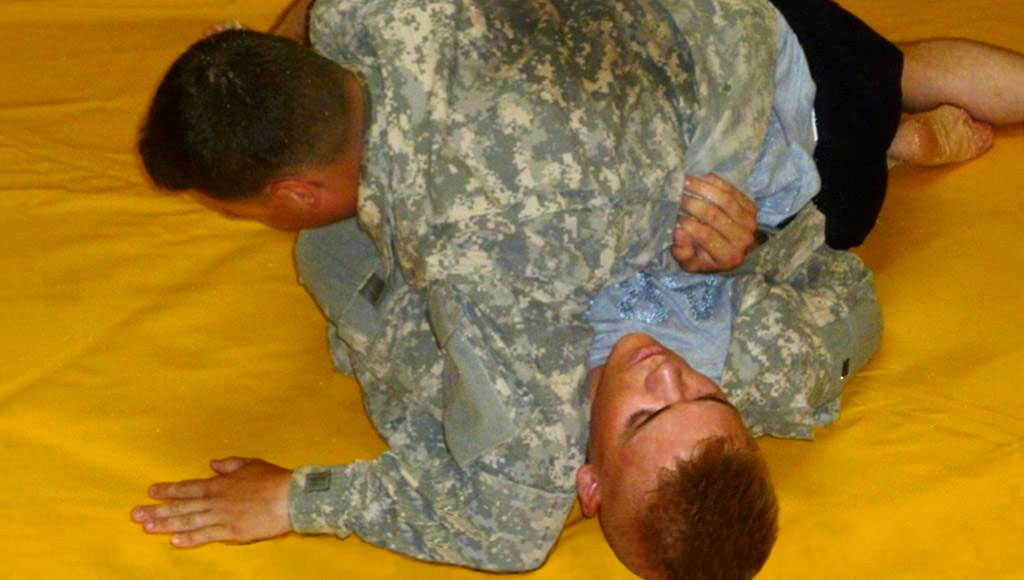
The Knee Cut Pass (also widely called the Knee Slice) is one of the first guard passes taught to white belts in most academies, and at the same time one of the most frequently seen passes at black belt world championship level. This guide covers where it came from, how the movement breaks down, three classic entry windows, its strengths and limits, the common counters, and the role it plays in the modern competitive game.
1. Origins: No Single Inventor, but the Foundation of Modern Passing
Unlike techniques such as the Kimura or the D'Arce, which trace back to a specific naming event, the knee cut pass has no single recognized inventor or breakout match. Its core action, driving a knee between the opponent's defensive legs and finishing in kesa gatame (scarf hold) or side control, comes from the basic control principles of judo groundwork (ne-waza). As Brazilian jiu-jitsu developed a far more granular passing framework from the 1990s onward, the movement was gradually isolated, named, and systematized into the standalone technique taught today. Because there is no verifiable single point of origin, this guide does not invent one, and instead focuses on the athletes who refined the pass to its highest level and genuinely defined how it looks in modern competition.
The most emblematic of them is the Brazilian competitor Lucas Lepri (born September 1984 in Uberlândia, Minas Gerais). He received his black belt in late 2006 under Elan Santiago, competes for the Alliance jiu-jitsu team, and campaigns at lightweight (-76 kg). Lepri has won nine IBJJF black belt world titles across the Gi and No-Gi divisions combined, making him one of the few athletes to hold adult black belt titles at the World, Pan, European and Brazilian National championships, and he reached the ADCC final twice, taking silver in 2015 and 2017. In 2022 he was inducted into the IBJJF Hall of Fame. The reason the jiu-jitsu community regards Lepri as the face of the knee cut is that he has spent years beating elite opposition on the biggest stages with the same pass. One widely circulated demonstration is his work against Bernardo Faria: Lepri first uses a collar grip to kill the tension in the De la Riva guard, then cuts his knee toward the mat and tight against his opponent's ribs to complete the pass.
The other athlete frequently cited in recent years is the Welsh competitor Ffion Davies. She started judo at eight, left it at seventeen for mixed martial arts and jiu-jitsu, and received her black belt in November 2018. Her IBJJF world titles span both divisions: two Gi World Championship golds (2022 and 2023) and four No-Gi World Championship golds (2018, 2021, and in 2023 both her weight class and the absolute division). She also won the women's 60 kg division at ADCC 2022, beating Bia Mesquita 6-0 in the semifinal and Brianna Ste-Marie 10-0 in the final, becoming the first Welsh and first British athlete to win an ADCC title. Her judo throwing base combined with a heavy passing style shows how well the knee cut holds up in the high-intensity exchanges of No-Gi competition.
No origin story, but the same answer from a whole generation of black belts
Ask ten black belts which pass they learned first and have used the longest, and a high proportion will name the knee cut. It did not rise on the back of one famous match. It became a required part of every curriculum because countless competitors at every level have stress-tested it for decades.
For the shear leverage acting on the passer's own knee and a targeted knee-protection training plan, see our companion medical article: the shear leverage of the knee cut pass and a knee-protection, anti-sweep guide.
2. Movement Breakdown: From Half Guard to Side Control
The knee cut usually launches from half guard or from an open guard in which the opponent's legs are spread apart, and the sequence breaks into four steps:
| Step | Key points |
|---|---|
| ① Establish position | Take an underhook with one arm to control the opponent's upper body, grip the same-side wrist or elbow with the other, and drive head pressure into the chest or the side of the jaw |
| ② Load the knee | Place the cutting-side knee onto the opponent's thigh, keeping the knee off the mat for now, with the other leg posted on the floor as the base |
| ③ Cut through | Drive your weight off the base leg so the top knee slices toward the mat between the opponent's legs, sitting low onto your own heel to keep the pressure on |
| ④ Free the leg and finish | Continue passing the base leg through and pull the foot free, keeping head pressure on the jaw so the opponent cannot turn in and escape, and finish in kesa gatame (scarf hold) or standard side control |
The most common failures are dropping the knee to the mat too early, leaning the weight too far forward, or not applying enough head pressure, which leaves room for the opponent to turn in underneath. Another frequent leak is an unstable base leg, which hands the opponent a single leg.
3. Entry Timing and Setups
The knee cut is rarely launched out of nowhere. It usually exploits a specific gap in the opponent's defensive structure:
First, when the opponent's half guard loses its lock. If the bottom player fails to clamp the ankle or knee, the top player can cut straight through to complete the pass, which is exactly why the knee cut is treated as the finishing move of the half guard pressure system.
Second, when the opponent's open guard is spread wide and their weight has shifted back. In that instant a gap opens in the leg line, and the passer can cut in and close the distance before the opponent rebuilds the guard structure.
Third, as a transition after another pass has been defended. The knee cut rarely stands alone. Typical chains include switching to the knee cut when a leg drag gets stuffed by a leg grab, or dropping the center of mass and cutting in when the opponent re-establishes guard against a torreando. This is precisely why it is considered the foundation of the passing system: almost any stalled pass can feed back into the knee cut.
4. Strengths and Limitations
| Strengths | Limitations |
|---|---|
| Legal and commonly taught at every belt from white up, in both Gi and No-Gi | The base knee carries weight against the mat for long stretches, loading the knee joint heavily |
| Can be entered as a transition from several other passes once they are defended | If the opponent gets an early underhook on the cutting leg, the pass stalls out and can even be swept |
| Finishes in side control or kesa gatame, so the resulting control is stable | Against very flexible opponents with strong guard retention, the cutting space is hard to find |
| Not sensitive to strength differences, since it runs on leverage and weight rather than muscle | Beginners commonly drop the knee too early and lean forward, handing the opponent a chance to reverse |
5. Common Counters and Reversals
The window for defending the knee cut sits in the phase where the opponent's knee has started to cut but has not yet settled on the mat. Once the head position and the underhook are both established, escaping becomes far harder. Three mainstream counters:
First, shrimping combined with wrist control. Recover the free leg and shrimp away while gripping the wrist of the arm reaching for the underhook, breaking the rhythm of their control building. This is the most fundamental and earliest defense.
Second, the deep half entanglement (often called the RDL lockdown). Thread your bottom arm behind the knee that is cutting through, and as the passer shifts weight onto the base leg, wrap that leg and convert the pass into a deep half guard exchange.
Third, bumping them over with the knee wedge (the bump). While the passer is halfway through the cut and their weight is not yet settled, wedge your defending knee into their hip and drive upward, adding an upper-body push to tip their center of mass over and reverse to top position.
What the passer still has when the defense is nearly working
When the opponent grabs the underhook on the cutting side to defend, the passer can abandon the knee cut entirely and switch to the double under pass, or take the back when the opponent over-commits their weight forward.
When the opponent sits up and pushes with the head to try to tip you over, it means they are burning a lot of energy fighting the pressure. The passer can release some of that pressure to draw out more effort, then ride the return and finish the pass, or move straight into knee-on-belly.
6. How Often It Shows Up in Competition
Under current IBJJF rules the knee cut is a general passing technique and does not fall under the submissions or leg entanglements restricted by belt rank, so it is legal from white belt through black belt in both Gi and No-Gi rule sets, with no rank or rule-version conditions attached.
The IBJJF and ADCC only publish placings and match results, not technique-level usage statistics, so a precise figure such as "the knee cut accounts for X percent of all passes" has no verifiable official or third-party primary source this article can cite. We therefore describe it qualitatively: judging by the instructional market and the athletes who represent it, the knee cut has long been among the earliest passes taught in the jiu-jitsu curriculum and among the most frequently seen at the highest level of competition. Lucas Lepri and Ffion Davies winning multiple world-level titles with it in the Gi and No-Gi respectively is the concrete evidence of that standing.
7. Safety Notes
The knee cut is not a submission and does not directly threaten the opponent's joints or airway. The physical load lands mainly on the passer's own base knee, because the cut requires one knee to bear weight against the mat for extended periods while rotating. A cross-sectional survey of 1,140 jiu-jitsu athletes found that the knee is the most frequently injured joint in the sport overall, accounting for 27.1% of all reported injuries, with meniscal damage the most common, followed by ACL tears tied with medial collateral ligament (MCL) injuries. That data covers all jiu-jitsu movements rather than the knee cut specifically, but it remains a useful reference for overall knee loading risk. For a deeper look at the shear leverage of the knee cut and targeted knee-protection training, see our companion article: the shear leverage of the knee cut pass and a knee-protection, anti-sweep guide.
・If you have a prior knee injury or surgery, drill on softer mats and avoid long single-knee rotational loading
・If you feel the opponent resisting hard enough to force your knee into an awkward angle, release the pressure immediately rather than fighting through it
・If you are the one being passed and feel your leg joints being over-wrapped or twisted, tap early to reset rather than waiting for pain
・On thin or hard academy mats the knee load from sustained single-knee support is noticeably higher, so discuss training volume with your coach
FAQ
Can white belts use the Knee Cut Pass?
Yes. The knee cut is a guard pass, not a submission, so it falls outside the joint locks and leg entanglements that IBJJF restricts by belt rank. It is usually taught in a white belt's very first passing class and is one of the earliest passes you learn and the one you keep using for a lifetime.
How do you escape once someone starts the knee cut on you?
The earlier you intervene, the better. As the opponent's knee begins to slice through, put your free leg back on the mat and shrimp away while grabbing the wrist of the arm reaching for the underhook, breaking the rhythm of their far-side control. If the pass is already half completed, thread your bottom arm behind the knee that is cutting through to build a deep half guard, or wedge your knee into their hip and use it as leverage for the bump. That is the critical escape window.
How does the knee cut differ from the leg drag and the torreando pass?
All three belong to the same passing family but apply force in different directions. The knee cut drives the top player's knee straight through the gap between the defensive legs and pins with a low, grounded center of mass; the leg drag pulls one of the opponent's legs across their own centerline and then travels to the back side; the torreando is a standing pass that steers both legs aside and walks laterally around them. The three chain together constantly, and a stuffed knee cut very often converts straight into a leg drag or a long step pass.
Is the Knee Cut Pass bad for your knees?
The knee is one of the most frequently injured joints in jiu-jitsu overall. A survey of 1,140 athletes found knee injuries accounted for 27.1% of all reported injuries, most commonly meniscal damage, followed by ACL tears and MCL injuries (tied by case count). That data covers all jiu-jitsu movements, not the knee cut specifically. Because the knee cut loads and rotates the base knee against the mat for long stretches, anyone with a prior knee injury should drill it on softer mats and avoid forcing the cut.
Does the Knee Cut Pass work in No-Gi competition?
Yes. Gi and No-Gi are both primary settings for the knee cut, and the only real difference is the grips: the Gi version often uses collar or sleeve grips to reinforce control, while No-Gi leans more heavily on the underhook and wrist control themselves. Ffion Davies, the 2022 ADCC women's 60 kg champion, is one of the athletes best known for powerful passing under No-Gi rules.
References
1. Wikipedia. Lucas Lepri. en.wikipedia.org (accessed 2026/08; supports Lepri's birthplace, weight class, black belt year and world title record)
2. Digitsu. Lucas Lepri BJJ Stats & Bio. digitsu.com (accessed 2026/08; used as a second source to cross-check Lepri's birth date, September 1984, and birthplace)
3. Elite Sports. Lucas Lepri: 2022 IBJJF Hall Of Famer. elitesports.com (accessed 2026/08; supports Lepri's titles at the four major championships, his ADCC record and his Hall of Fame year)
4. BJJ Fanatics. Making The Knee Cut Pass Look Easy With Lucas Lepri. bjjfanatics.com (accessed 2026/08; supports the technical detail of Lepri's knee cut demonstration against Bernardo Faria)
5. Wikipedia. Ffion Davies. en.wikipedia.org (accessed 2026/08; supports Davies' background, weight class, judo history and her 2022 and 2023 Gi World Championship titles)
6. Digitsu. Ffion Davies BJJ Stats & Bio. digitsu.com (accessed 2026/08; used as a second source to cross-check Davies' first Gi world title in 2022 and her 2023 title defense)
7. IBJJF official news. 2023 World No-Gi Recap: Ffion and Roberto Win Absolute Gold. ibjjf.com (accessed 2026/08; official primary source supporting Davies' four No-Gi World Championship titles in 2018, 2021 and 2023 with double gold)
8. BJJ Ee. Ffion Davies Is The First European To Win Double Gold At IBJJF No-Gi World Championship. bjjee.com (accessed 2026/08; used as a second source to cross-check Davies' four No-Gi world titles in 2018, 2021 and 2023 double gold)
9. Elite Sports. Ffion Eira Davies: 2022 ADCC World Champion & Welsh Grappler. elitesports.com (accessed 2026/08; supports the match details of Davies' 2022 ADCC women's 60 kg title run and her 2022 Gi World Championship title)
10. Evolve MMA. How To Perform The Knee Slice/Cut Pass In BJJ. evolve-mma.com (accessed 2026/08; supports the movement breakdown steps and the common mistakes)
11. BJJ World. Knee Cut Pass Defense: Exploring Several Different Options. bjj-world.com (accessed 2026/08; supports the counters and reversals)
12. Hinz M, Kleim BD, Berthold DP, Geyer S, Lambert C, Imhoff AB, Mehl J. (2021). Injury Patterns, Risk Factors, and Return to Sport in Brazilian Jiu Jitsu: A Cross-sectional Survey of 1140 Athletes. Orthop J Sports Med;9(12):23259671211062568. PubMed PMID 34988235 (supports the figure that the knee accounts for 27.1% of all jiu-jitsu injury cases, with meniscal damage most common followed by ACL and MCL injuries tied)