 YR Sports Lab
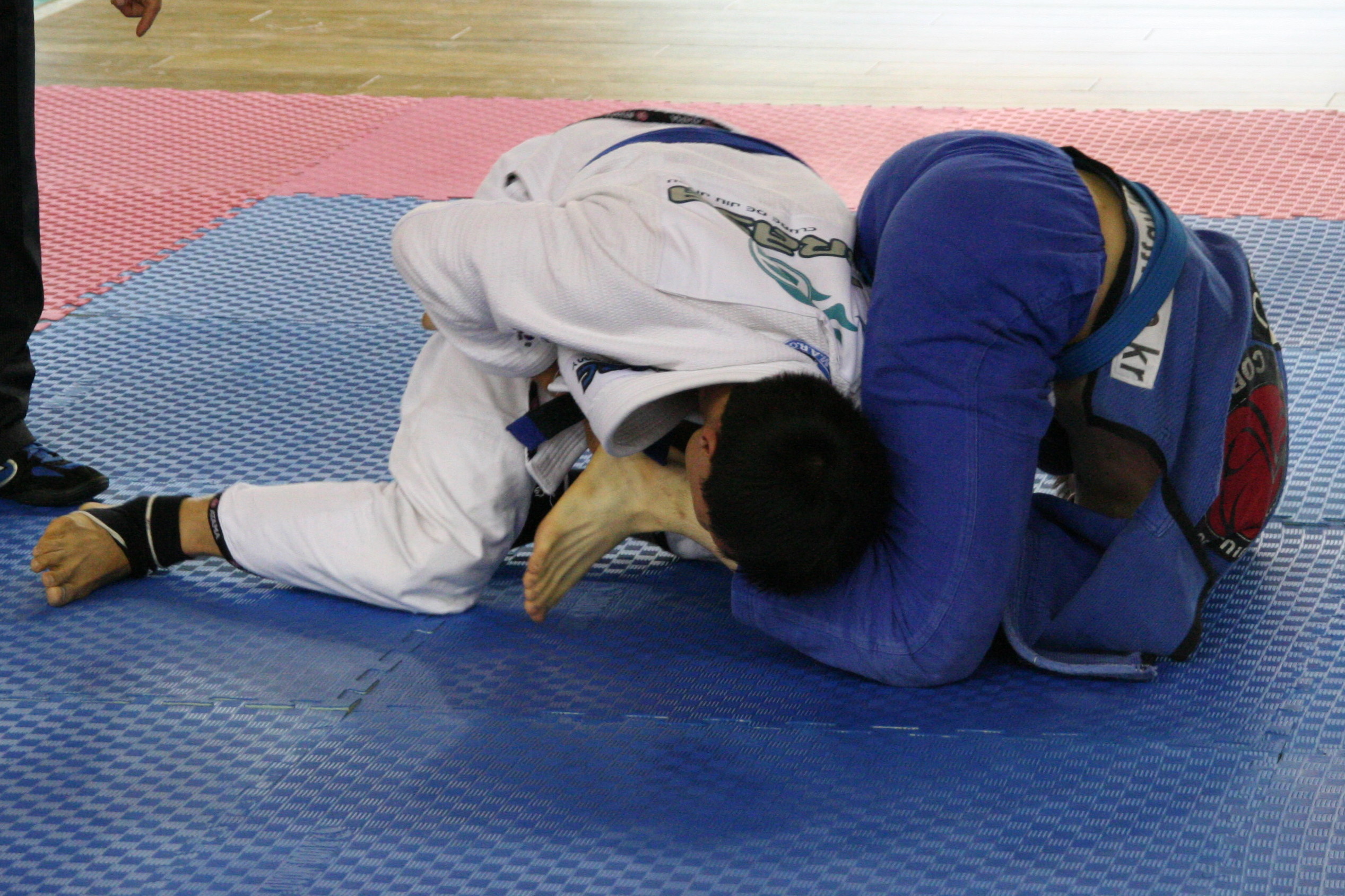
A ten-minute black belt final that ended 0-0, decided by two advantages. In the adult male black belt light final of the 2024 European Jiu-Jitsu IBJJF Championship, Elijah Dorsey of the United States (blue gi) faced Espen Mathiesen of Norway (white gi). This article captures the official video frame by frame, cross-checks the scoreboard and live commentary, and splits the match into six phases: who initiated what, how the opponent answered, which exchange came closest to succeeding, and the exact moment each position turned into the next. Watch the video first, then follow the timeline below.
Video: "Elijah Dorsey vs Espen Mathiesen / European Championship 2024" from the official IBJJF YouTube channel. The match starts at roughly 0:40. Every "video time" in this article refers to this video, and every "match clock" reading refers to the countdown board in the lower left of the frame.
1. Match Background and How the Footage Was Read
This was the adult male black belt light final (gi limit 76 kg) at the 2024 European Jiu-Jitsu IBJJF Championship. The video was published by the official IBJJF channel, runs 12 minutes 47 seconds, and the regulation match time is 10 minutes. According to the live commentary, Mathiesen won this division at the 2022 Europeans and Dorsey took third the previous year; this win was Dorsey's first major title at black belt.
Method: the video was captured at roughly 7-second intervals, producing more than 80 frames. For each frame the top and bottom position, both athletes' grips and any leg entanglement were logged, then matched against the on-screen scoreboard to confirm exactly when the advantages appeared. Technique names are based on what the frames show; the commentary is used to cross-check, not copied. Wherever the referee or the camera angle hides the action, the text explicitly says "could not be confirmed".
2. Opening: Guard Pull, a Jump Pass and the First Inverted Entanglement (video 0:40–1:45)
Mathiesen showed almost no intention of fighting for a takedown. He sat straight down into open guard (guard pull), and Dorsey tried to "jump right over" the legs from standing, the first attack the commentary calls out at 0:54. The 0:56 frame shows the result: Dorsey is already kneeling inside Mathiesen's guard with his legs tangled up, and the first fast pass has failed.
The next 40 seconds or so are the first real scramble of the match. Using the flexibility of his hips and legs, Mathiesen wraps one of Dorsey's arms with a leg while threading the other foot underneath and behind Dorsey's leg. Frames from 1:20 to 1:27 show Mathiesen fully inverted, legs pointing up, fighting for Dorsey's leg and for an angle. This kind of inverted entry is common for berimbolo or kneebar transitions, but the camera angle does not confirm whether he was ultimately aiming for the back or for a leg entanglement.
At 1:35 the commentary describes Dorsey as having "a good way of escaping", and the 1:41 frame shows Dorsey back on top, flattening Mathiesen and hugging one leg to try to pass; by 1:48, however, Mathiesen has already put his legs back in front of Dorsey and recovered guard. The verdict for this phase: Dorsey's first explosive pass was neutralised, and Mathiesen's first inverted attack gained no position either. Both returned to a neutral open guard.
3. The De La Riva and Lasso Battle: Dorsey's Foot Gets Stuck (video 1:45–4:45)
From 1:48 Mathiesen moves into his main weapon for the whole match: De La Riva guard combined with collar grips, one foot hooked from the outside around Dorsey's lead leg, the other foot posted on the hip or thigh, a hand on the collar as a frame. At 2:12 the commentary names the key point: "his foot is stuck, so it's not about power anymore". Dorsey's explosiveness and pressure, his signature qualities, could not be applied while the foot was hooked, and he was forced to slow down and back off the pressure.
Frames from 2:16 to 2:37 show Dorsey standing to break the position with knee cuts and standing pressure, while Mathiesen raises one leg high into a lasso (wrapping the opponent's sleeve and arm with the foot) plus a knee shield. At 2:41 the commentary notes that Dorsey on top "resets the position back to a more neutral spot", followed from 2:44 to 3:33 by a series of kneeling pass probes: Dorsey cutting in with knee cut angles, Mathiesen filling every gap with a knee or a foot.
The commentators' observation: speed creates gaps
Between 2:51 and 3:17 the commentary explains the stalemate: if Dorsey passes on speed alone, his movements leave space, and Mathiesen's guard system works precisely by inserting a foot or knee into any gap that appears. Speed was not going to be the way through this guard, something that had already been proven several times that day. The read was confirmed later in the match: what finally worked for Dorsey was pressure, not speed.
From 3:41 to 3:49 Dorsey stands again and Mathiesen switches to a spider guard variation with both feet on the hips and arms; from 3:57 to 4:05 Mathiesen sits up into a seated guard closer to Dorsey's legs, and at 4:19 the commentary describes a return to "the De La Riva control", with Dorsey trying to underhook the leg to remove the hook. At 4:33 the commentary highlights Mathiesen's left-hand cross collar grip: it works as a frame and as an off-balancing tool at the same time. By 4:46 the summary is "just past four minutes, nothing happened", and the scoreboard still reads 0-0 with no advantages.
4. The First Breakthrough: Knee Cut to Leg Drag, Two Advantages in Six Seconds (video 4:45–5:45)
The 4:45 frame shows Mathiesen inverting again, legs up, trying to entangle Dorsey's legs; at 5:01 Dorsey drives over the top, and by 5:09 he is back on his knees facing a seated Mathiesen. The commentary frames this stretch as "every time Dorsey uses his explosiveness is when things get dangerous for Mathiesen, but he recovers so well".
The real turning point runs from 5:15 to 5:41. Dorsey first drives in with a knee cut, then drags Mathiesen's leg across to the other side, creating a leg drag angle, and gets almost all the way to the side. Frames at 5:20 and 5:25 show Dorsey's body already past Mathiesen's leg line, right hand gripping the collar, working to throw his leg over; Mathiesen's answer is to turn onto his side and curl into turtle to avoid being pinned in side control.
The scoreboard shows Dorsey's first advantage at 5:07 on the match clock and the second at 5:01, only six seconds apart. From 5:17 to 5:29 the commentary describes it as "Dorsey almost gets to the side, has been trying to throw his leg over, he's got the lapel with his right, that's definitely going to get very close to the advantage", followed by "that's it, and that's the game he has to play". The first advantage corresponds to the near-complete pass; when the second appeared, Dorsey was pressing down on the turtled Mathiesen, and the camera angle does not confirm whether the referee judged it a second near pass or a near back take.
From 5:48 to 5:55 Mathiesen sits back up and puts his legs in front of Dorsey again, guard recovered. This sequence did not earn the 3 points for a pass, but it decided the match: from here to the final buzzer the scoreboard never changed again.
5. Mathiesen's Counter Chain: Single Leg X to Kneebar Threat (video 5:45–7:30)
Down two advantages, Mathiesen's guard shifted from "blocking" to "creating threats". From 5:47 the commentary describes him entering single leg X guard and transitioning toward a kneebar; the 6:02 frame clearly shows Mathiesen lying on his side with both legs and an arm wrapped around Dorsey's standing leg, while Dorsey leans forward with both hands posted on his opponent to keep his balance.
The transition chain the commentators described
From 5:52 to 6:10 the commentary points out that the same combination showed up several times that day, including in the women's finals: single leg X → kneebar → 50/50 → foot lock → back take → sweep. Each step depends on the opponent's reaction, and every option opens up once the opponent is "completely stuck". That description explains why Dorsey chose to stand still rather than rip his leg free: pulling in any direction would feed the next link in the chain.
Frames from 6:09 to 6:23 show Dorsey keeping his standing posture, knees slightly bent and weight low, which the commentary calls "leading well with his lower body"; at 6:28 it adds that Mathiesen is "right on Dorsey's hip, forcing him to anchor himself, but at the same time very vulnerable". At 6:52 Mathiesen stretches Dorsey out for the first time in the match and tries to sweep; Dorsey's standing balance holds and he is not swept.
Between 6:30 and 7:19 the two switch repeatedly between kneeling and standing: Dorsey drops to his knees at 6:30 and 6:58, then stands again at 7:12, while Mathiesen keeps his De La Riva hook and collar grips. From 7:02 to 7:19 the commentary's read is that Dorsey is "playing the right game, being patient, not exposing himself, cancelling everything Mathiesen tries", with the reminder that he is up two advantages and "cannot rush, otherwise he's going to get swept". At 7:21 the commentary notices Mathiesen's sleeve and cross collar grips are too far away, and Dorsey's distance control keeps that attack from becoming more threatening.
6. The Final Three Minutes: Collar Anchors and the "Spread the Knees" Pin (video 7:30–10:40)
At 7:32 the commentary calls time: "three minutes left, Dorsey leading by two advantages". Frames from 7:26 to 7:47 show Dorsey standing and driving forward while Mathiesen, on his back, blocks with his legs and collar grips. From 7:50 to 8:07 the commentary describes a detail: the moment Dorsey steps back and releases a grip, Mathiesen immediately kicks his left leg out to change position, an awareness of grip changes and ability to reposition the legs that the commentary calls remarkable. At 8:09 it reads Mathiesen's mindset: "I've got a very good position, but I'm not able to push or create anything, two and a half minutes left, let's change the game".
The 8:01 frame shows Mathiesen sitting up with Dorsey standing in front of him; from 8:08 to 8:15 Mathiesen lies back down with both legs raised, hunting for lasso and spider grips, while Dorsey kneels and takes both collars. At 8:30 the commentary explains Dorsey's new plan: "anchors on the collar, folding him, he doesn't need to pass anymore".
From 8:22 to 9:11 comes the most decisive pin of the match. The frames show Dorsey with both hands deep in the collar, driving Mathiesen's left knee down with his chest while spreading both of the opponent's knees apart. From 8:58 to 9:16 the commentary narrates it step by step: the right hand goes deeper into the collar, the knees get stretched apart, Mathiesen's mobility keeps shrinking, "for the first time Mathiesen is a little bit stuck". From 9:21 to 9:29 Mathiesen is forced to replace his right-hand grip, and the commentary repeats "replacing again".
From 9:18 to 9:39 Mathiesen still tries to raise his legs for a lasso, while Dorsey sinks his hips back and keeps his legs spread; the 9:39 frame shows Dorsey's chest on Mathiesen's body with the right hand still locked on the collar. The commentary's read from 9:51 to 10:18 is the key: "Mathiesen is trying to move him for the first time and he can't, because Dorsey is constantly spreading his legs, the hips are stuck", adding that "the only way to stop someone with this kind of guard is either to compress the knees together or spread the knees apart".
Frames from 9:46 to 10:07 show Mathiesen inverting once more in the last minute, legs going over his head, trying to change the angle; at 10:14 Dorsey is still on top, chest to chest. The 10:21 frame shows the two apart, Mathiesen seated and Dorsey standing, and from 10:28 to 10:35 Mathiesen turns to turtle while Dorsey drives over the top trying to reach north-south. From 10:24 to 10:31 the commentary describes "Dorsey moving to the side, Mathiesen inverts, trying to go to north-south but Mathiesen pummels the right leg in". Time expires and Dorsey wins 0-0 on two advantages.
7. Full Match Timeline
| Video time | Match clock | Initiator | Action | Response and outcome |
|---|---|---|---|---|
| 0:48–0:56 | 9:52–9:44 | White | Sits down into open guard | Dorsey tries to jump straight over the legs, gets tangled, ends up kneeling in guard |
| 1:00–1:35 | 9:40–9:05 | White | Wraps arm with leg, threads foot behind the leg, inverts for an angle | Dorsey escapes, briefly flattens him and hugs a leg at 1:41 |
| 1:48–2:40 | 8:52–8:00 | White | De La Riva hook with collar grips, lasso variations | Dorsey's foot is stuck; he stands, backs off the pressure, position resets |
| 2:44–3:33 | 7:56–7:07 | Blue | Kneeling knee cut probes | Mathiesen fills gaps with knee shield and feet, no pass |
| 3:41–4:37 | 6:59–6:03 | White | Spider guard, seated guard, back to De La Riva, cross collar off-balancing | Dorsey tries to underhook the leg to remove the hook, no score either way |
| 4:45–5:09 | 5:55–5:31 | White | Inverts again to entangle the legs | Dorsey drives over the top, returns to kneeling |
| 5:15–5:41 | 5:25–5:01 | Blue | Knee cut to leg drag, gets to the side, throws leg over, right hand on the collar | Mathiesen turns to turtle to avoid side control; Dorsey awarded two advantages (5:07, 5:01) |
| 5:48–5:55 | 4:52–4:45 | White | Sits up and recovers guard | Back to open guard |
| 5:50–6:23 | 4:50–4:17 | White | Single leg X guard, transitioning toward a kneebar | Dorsey stays standing, weight low and anchored, does not pull the leg out |
| 6:52 | 3:48 | White | First real attempt to stretch Dorsey out and sweep | Dorsey's standing balance holds, not swept |
| 6:30–7:47 | 4:10–2:53 | White | De La Riva with sleeve and cross collar attacks | Dorsey controls distance and cancels each attempt; Mathiesen switches leg position whenever a grip is released |
| 8:01–8:15 | 2:39–2:25 | White | Sits up, lies back, raises both legs hunting lasso and spider grips | Dorsey kneels with both collar grips and switches to a "no need to pass" plan |
| 8:22–9:39 | 2:18–1:01 | Blue | Collar anchors, chest on the knee, spreads both knees apart | Mathiesen's mobility drops, forced to re-grip, stuck for the first time |
| 9:46–10:07 | 0:54–0:33 | White | Inverts, legs over the head, trying to change the angle | Dorsey keeps his legs spread and hips sunk, Mathiesen's hips cannot turn |
| 10:21–10:38 | 0:19–0:00 | Blue | Drives onto the turtled Mathiesen, tries to circle to north-south | Mathiesen pummels the right leg back in; time expires, 0–0, Dorsey wins on two advantages |
8. Technical Takeaways
First, only one sequence in the whole match came close to scoring, and it came from pressure plus angle, not speed. Dorsey's jump pass, knee cuts and standing probes in the first four and a half minutes were all absorbed by Mathiesen's legs filling the gaps; the sequence that worked from 5:15 to 5:41 started with a knee cut driven in with pressure and then a leg drag to the other side that changed the angle, leaving Mathiesen with turtle as his only option.
Second, Mathiesen's guard almost never failed at blocking, but it never completed a sweep or submission. He inverted at least three times, threatened a kneebar from single leg X once, and off-balanced repeatedly from De La Riva and lasso; Dorsey answered all of it with standing anchors and distance control. The commentary's read was "he's got a very good position, but he cannot push".
Third, the strategic switch after taking the lead was the second decisive point of the match. From 8:22 Dorsey gave up on passing and used collar anchors and knee spreading to attack the hip mobility that Mathiesen's guard system depends on. The commentary noted it was the first time all weekend Mathiesen had been "stuck for movement against his will", and it was also the stretch with the most grip replacements.
Fourth, the grip reactions from both athletes were the most subtle exchange of the match. From 7:50 to 8:07 Mathiesen kicked his leg to a new position the instant Dorsey released a grip; from 9:21 to 9:29 it was Mathiesen who was forced to replace his right-hand grip. This rhythm of "a grip changes, so the legs change" is the core of how a De La Riva system fights a pressure passer, and it is why a 0-0 match was anything but dull.
Frequently Asked Questions
How was this 0-0 final decided?
Neither athlete reached a scoring position, so Dorsey won on two advantages. Under IBJJF rules a referee may award an advantage when an athlete nearly completes a guard pass or another scoring action without establishing control, and when points are tied the athlete with more advantages wins. Both advantages came in the same passing sequence, with 5:07 and 5:01 left on the match clock.
Which guards did Mathiesen rely on during the match?
De La Riva and lasso were his main tools. In the middle of the match he switched to single leg X and threatened a kneebar, and he inverted once early and once late to recover angles or entangle Dorsey's legs. He never let Dorsey settle into side control, but he also never completed a sweep.
Why did Dorsey stop trying to pass in the last three minutes?
He was already up two advantages, and the commentary read his adjustment as a decision that he no longer needed to pass: both hands deep in the collar to pin the upper body, chest driving the opponent's knee down and spreading the knees apart so Mathiesen's hips could not turn. It scored nothing, but it held the lead until time ran out.
How can I do this kind of frame-by-frame match breakdown myself?
Capture the video at a fixed interval (this article used about 7 seconds), lay the frames out as a timeline, and note top and bottom position, grips and leg entanglements for each frame. Then cross-check the scoreboard and commentary for the exact moments advantages appear. Record both the video time and the match clock, and describe only what the frames actually show, marking unclear moments as inferred.
References
1. IBJJF (International Brazilian Jiu-Jitsu Federation). Elijah Dorsey vs Espen Mathiesen / European Championship 2024 [video]. youtube.com (accessed Sept 2026; all frame readings, scoreboard times and commentary quotes in this article come from this official video, whose description reads ADULT / BLACK-BELT / MALE / LIGHT - FINAL)
2. IBJJF. Events Results. ibjjf.com (accessed Sept 2026; the official source for placements in every division of the 2024 European Jiu-Jitsu IBJJF Championship)
3. IBJJF. Rule Book (download from the Books & Videos page). ibjjf.com (accessed Sept 2026; supports the description of how advantages are awarded, tie-breaking by advantages, and the 76 kg limit for the adult male gi light division)